
Every Black patient I have ever cared for who developed chronic kidney disease carried the same earlier label on their chart: salt-sensitive hypertension. In African Americans, 75 percent of patients with high blood pressure are salt sensitive, compared to 50 percent across all races.[1] That number is one of the loudest warning bells in medicine. And for decades, while researchers chased a cure for the kidney disease itself, the warning bell kept ringing — and most of us never heard it.
Recently, a historian helped me hear it clearly.
The Historian Who Saw What Doctors Missed
Dr. Constance B. Hilliard is a Harvard-trained professor at the University of North Texas and the author of Ancestral Genomics (Harvard University Press). She is not a physician. She is a genomic historian — someone who reads medieval African manuscripts and modern DNA studies side by side. I sat down with her on a recent episode of the Better Black Health Podcast to dig into her work, and the conversation reshaped how I talk about salt with my patients.
Her story starts with a personal scare. While living in Japan in 2008, she was told she was in renal failure based on Japanese lab norms. When she got home, an American doctor looked at the same blood work and told her she was fine — because the “normal” ranges used in the United States have been calibrated against a population that already has widespread kidney damage among Black patients. (Medicine is starting to rethink how race is built into kidney tests: in 2021, the National Kidney Foundation and the American Society of Nephrology recommended removing race from the standard formula used to estimate kidney function[3] — part of the broader move toward precision medicine, care based on the individual rather than a racial label.) That moment sent her digging into West African history. What she found connects directly to your kidneys.
Gold for Salt — Pound for Pound
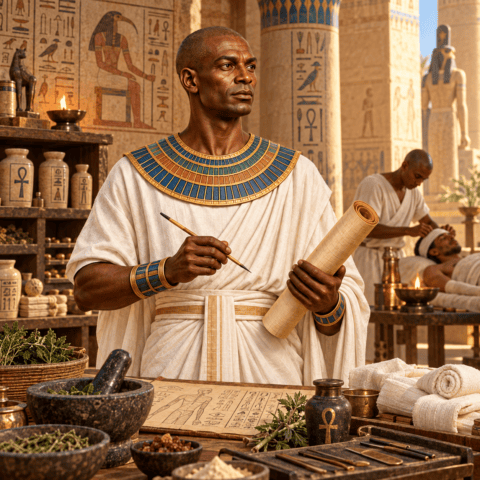
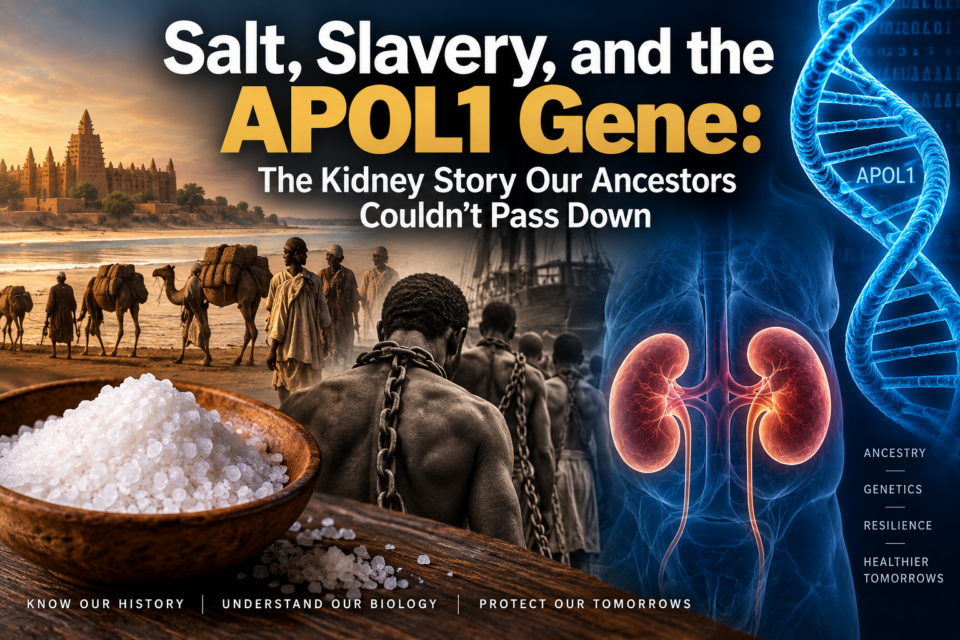
If you walked through Timbuktu seven hundred years ago, you would have been standing in one of the wealthiest trading cities on Earth. Gold flowed north out of the African interior; salt was carried south across the Sahara on caravans of camels. Here is the part that should stop you cold: medieval trade records that Dr. Hilliard translated show that elites in the interior of West Africa were willing to trade their gold for rock salt pound for pound.

Salt was that precious because nobody in the interior had it. Interior West African villagers lived hundreds of miles from the ocean. They got their food from plants, fish from inland rivers, and game animals. Their daily sodium intake is estimated at less than 500 milligrams a day — about one-tenth of what the average American eats now.
Coastal West Africans were a different story. With the Atlantic on their doorstep, they had as much salt as they could haul. Their diet was high in sodium. And — this is the part the medical textbooks leave out — it was coastal kingdoms that conducted slave raids on the low-sodium villages of the interior. The people who were chained, marched as much as a thousand miles to the coast, and loaded onto slave ships were drawn overwhelmingly from interior populations who had never tasted table salt. They are the ancestors of most Black Americans alive today.
A Gene That Matches the History
Here is where the history meets the lab. The G1 and G2 variants of the APOL1 gene arose in Africa and are common across much of West Africa today — large studies in Nigeria and Ghana have found that roughly one in three people carry at least one copy.[5] Dr. Hilliard’s work asks a different question: what happens when people whose kidneys were shaped by a very low-salt world are dropped into one of the saltiest diets on Earth? (I’ve written about APOL1 and kidney disease in more detail here.)

The standard story — and it remains true — is that G1 and G2 protect against African sleeping sickness, the deadly infection spread by the tsetse fly.[4] That is why these variants reached such high frequency in Africa. Dr. Hilliard’s research raises an additional possibility the medical literature has largely overlooked: that G1 and G2 may also help the kidneys hold onto sodium.[2] In a low-sodium environment like the interior of West Africa, that would be a survival advantage. In a high-sodium environment like the modern United States, it becomes a slow-motion catastrophe. This idea still needs to be tested in clinical studies — but it fits what many of us see in practice every day.
It is also a reminder that genes are not destiny. The same variants raise the risk of kidney disease in West Africa, too.[5] Whether the gene ever causes harm depends a great deal on environment — including what is on our plates.
The Americans who carry G1 and G2 are descendants of those West African ancestors. More than one in three Black Americans carries at least one copy, and about 13% — roughly 1 in 8 — carry two. Two copies is where kidney risk is highest: about 1 in 5 people with two copies will develop kidney disease.[6] Many of their great-great-grandparents went from a few hundred milligrams of sodium a day to the 3,400 to 5,000 mg that fills the modern American grocery cart. That dietary jump — across just a handful of generations — is, in Dr. Hilliard’s view, a big part of what is damaging our kidneys.
APOL1-mediated kidney disease (AMKD) can progress quickly and often causes no symptoms until the damage is advanced. It is one reason Black Americans are about four times as likely as white Americans to develop kidney failure.[7] Most people who carry these variants have never heard a word about them.
What “Soul Food” Got Mixed Up With
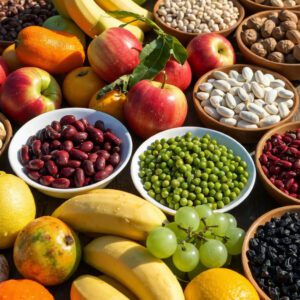
I want to say this gently, because food carries memory and pride. The version of soul food that leans on salty hunks of preserved meat, ham hocks, heavy seasoning blends, and salt-cured everything is not what our West African ancestors ate. It is largely an inheritance of slavery and Reconstruction-era poverty, when salt was the cheapest way to preserve scraps of meat that nobody else wanted. Honoring that survival is not the same as eating that way today. Our actual ancestral diet — the one our DNA was shaped by — was low-salt, plant-and-fish heavy, and rich in potassium. Reclaiming that is the deeper tradition.
Here’s What You Need To Do
The American Heart Association recommends an ideal limit of no more than 1,500 mg of sodium per day for most adults — and it matters most for people who are salt sensitive, as most Black adults with high blood pressure are. Most of us are eating two to three times that. The three actions below all matter — pick one to start this week.
- Cut your sodium in half — start with the obvious offenders. Canned soup, cold cuts, fast food, bouillon, soy sauce, pizza, ham, sausage, and “seasoned” raw chicken (which is injected with a salt solution at the plant) are the worst sources. Read labels. Aim for under 1,500 mg/day. In the landmark DASH-Sodium trial, cutting salt lowered blood pressure in every group studied — and the benefit was especially large in Black participants.[8]
- Ask your doctor about your kidney function — and about APOL1. If you have a personal or family history of high blood pressure, kidney disease, or dialysis, ask specifically for a urine albumin-to-creatinine ratio (UACR) in addition to your routine creatinine. UACR catches kidney damage early, when there is still time to slow it down. APOL1 genetic testing is now available; if you or a family member is considering kidney donation, or you are showing early signs of kidney damage, knowing your APOL1 status matters. This is precision medicine in practice: a genetic test that tells you and your doctor whether your kidneys need closer watching. It may soon matter even more: inaxaplin, the first drug designed to target APOL1 kidney disease directly, is in a late-stage trial, with early results expected in 2027.[9]
- Share this story with the people you love. Our ancestral history was stolen from us during slavery. The piece that says your kidneys are sensitive to salt, and here is why is one of the most important pieces we can put back. Tell your mother. Tell your barber. Tell your pastor. Tell your children. AMKD is not a sentence — but only if we get to it before the damage is done.
We have a saying in this work: better health starts with better information. This is one of those pieces of information that can change a life — maybe yours.
To hear Dr. Hilliard tell this story in her own words, listen to our conversation on the Better Black Health Podcast. For deeper reading, see her book Ancestral Genomics (Harvard University Press) and her paper “The Mislaid Clue to APOL1 Kidney Disease Prevention in Blacks” in the Journal of Human Hypertension (2025).
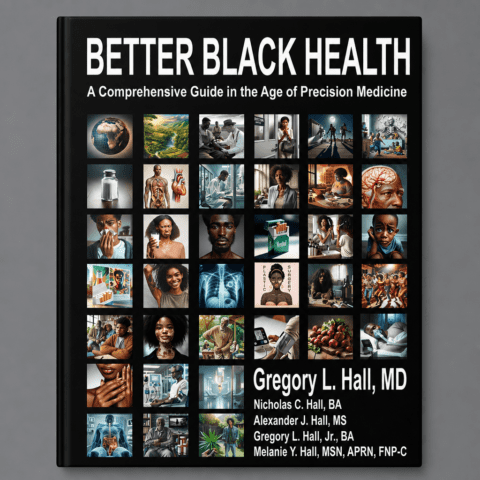
This same pattern — ancestry, environment, and biology colliding in ways our medical training never taught us to see — shows up again and again once you know how to look for it. I wrote Better Black Health: A Comprehensive Guide in the Age of Precision Medicine to walk through APOL1 and the other places where that collision is happening, and what you and your doctor can actually do about it. For clinicians, I cover APOL1 in Precision Medicine for African Americans (Springer Nature, 2nd ed., 2025).
References
- Elijovich F, Weinberger MH, Anderson CAM, et al. Salt sensitivity of blood pressure: a scientific statement from the American Heart Association. Hypertension. 2016;68(3):e7-e46. doi.org/10.1161/HYP.0000000000000047
- Hilliard CB. The mislaid clue to APOL1 kidney disease prevention in Blacks. J Hum Hypertens. 2025;39:389-391. nature.com/articles/s41371-025-01024-6
- Delgado C, Baweja M, Crews DC, et al. A unifying approach for GFR estimation: recommendations of the NKF-ASN Task Force on Reassessing the Inclusion of Race in Diagnosing Kidney Disease. J Am Soc Nephrol. 2021;32(12):2994-3015. doi.org/10.1681/ASN.2021070988
- Genovese G, Friedman DJ, Ross MD, et al. Association of trypanolytic ApoL1 variants with kidney disease in African Americans. Science. 2010;329(5993):841-845. doi.org/10.1126/science.1193032
- Prevalence and impact of APOL1 kidney risk variants in West Africa: insights for global kidney disease assessment and treatment. J Am Soc Nephrol. 2025. pmc.ncbi.nlm.nih.gov/articles/PMC11888956/
- American Kidney Fund. APOL1-mediated kidney disease (AMKD). kidneyfund.org/all-about-kidneys/other-kidney-diseases/apol1…
- National Institute of Diabetes and Digestive and Kidney Diseases. Kidney disease statistics for the United States. niddk.nih.gov/health-information/health-statistics/kidney-di…
- Sacks FM, Svetkey LP, Vollmer WM, et al. Effects on blood pressure of reduced dietary sodium and the Dietary Approaches to Stop Hypertension (DASH) diet. N Engl J Med. 2001;344(1):3-10. doi.org/10.1056/NEJM200101043440101
- Vertex Pharmaceuticals. Vertex announces positive results from Phase 2b AMPLIFIED study of inaxaplin in additional populations of people with AMKD and completion of enrollment in the Phase 2/3 AMPLITUDE trial. Press release, September 22, 2026. news.vrtx.com/news-releases/news-release-details/vertex-anno…