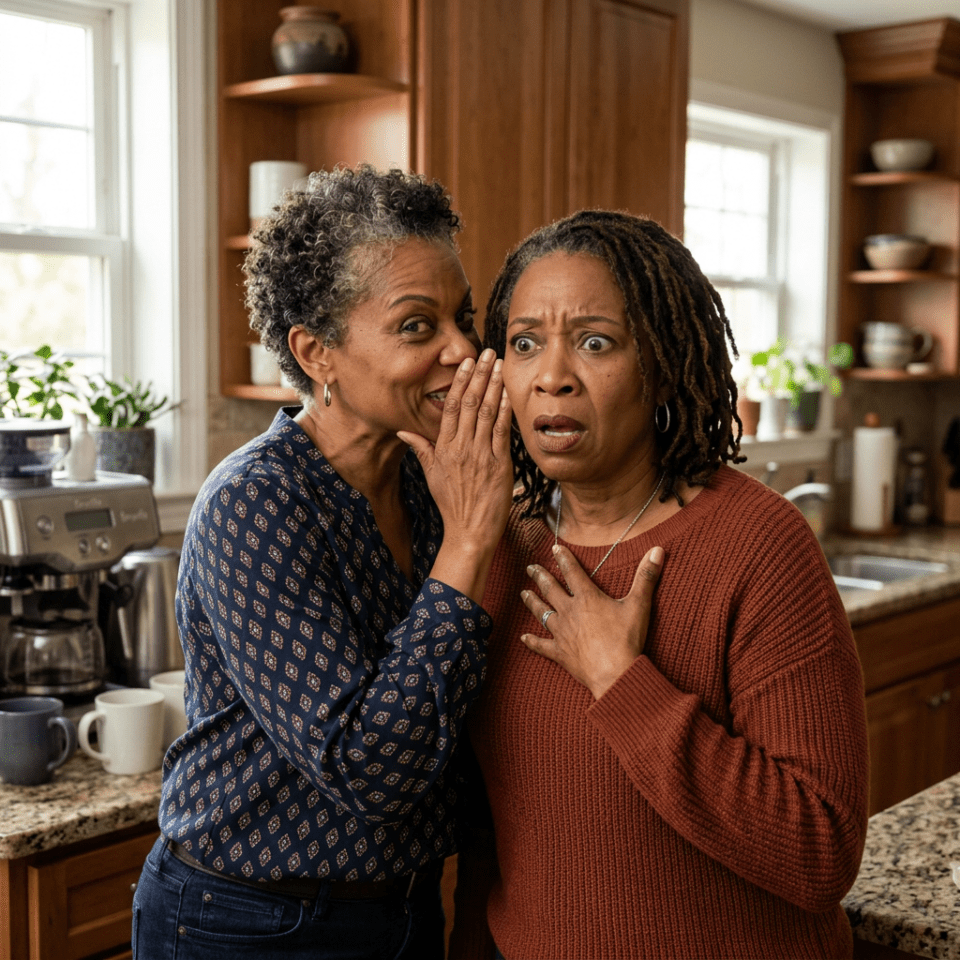
I have heard it in my office, in barbershops, and at family reunions. A patient gets a concerning lump or an abnormal scan result. Their doctor recommends a biopsy. And someone in the room — a cousin, a neighbor, an aunt who means well — leans over and whispers: “Don’t let them cut you. Once the air hits it, it spreads.”
That conversation has cost lives. I am not being dramatic.
This belief — that exposing cancer to air during a biopsy causes it to spread — is one of the most persistent and damaging health myths in the Black community. It leads people to delay or refuse biopsies, the very procedure that tells us whether a suspicious lump is harmless or life-threatening. And it leads them to show up months or years later with a cancer that has already spread to other organs, when survival odds are dramatically lower.
Let me be direct: this myth is false. There is no medical evidence that air exposure during a biopsy causes cancer to spread. None. Not a single peer-reviewed study supports it.
Where Did This Myth Come From?
Myths don’t come from nowhere. This one likely has roots in several real — but misunderstood — experiences.
First, biopsies used to be far more invasive than they are today. Decades ago, an “open” surgical biopsy was common, requiring a larger incision and more tissue disruption. Patients who had these procedures sometimes received a cancer diagnosis shortly afterward and, in the same breath, learned their cancer was more advanced than originally thought. The logical — but incorrect — conclusion was: the surgery made it worse.
What actually happened in many of those cases was staging bias. The cancer was already advanced before the biopsy. The biopsy simply confirmed it. The imaging technology of earlier decades couldn’t see what modern CT scans, MRIs, and ultrasounds reveal today.
Second, some cancers grow and spread on their own — that is their biological nature. If someone delays getting a biopsy for six months because of this myth, and the cancer has spread by the time they finally see a doctor, it is tempting to blame the eventual biopsy. But it was the delay that allowed the spread — not the procedure.
What a Biopsy Actually Does
A biopsy is a diagnostic tool, not a treatment. A needle, a small punch tool, or in some cases a minor incision is used to remove a tiny sample of tissue. That sample goes to a pathologist, who examines it under a microscope and tells us exactly what we are dealing with.
Modern biopsies come in several forms:
- Fine needle aspiration (FNA) — a thin needle draws out a small number of cells. Takes minutes.
- Core needle biopsy — a slightly larger needle removes a sliver of tissue. Still minimally invasive.
- Surgical biopsy — less common today, used when needle biopsies aren’t sufficient.
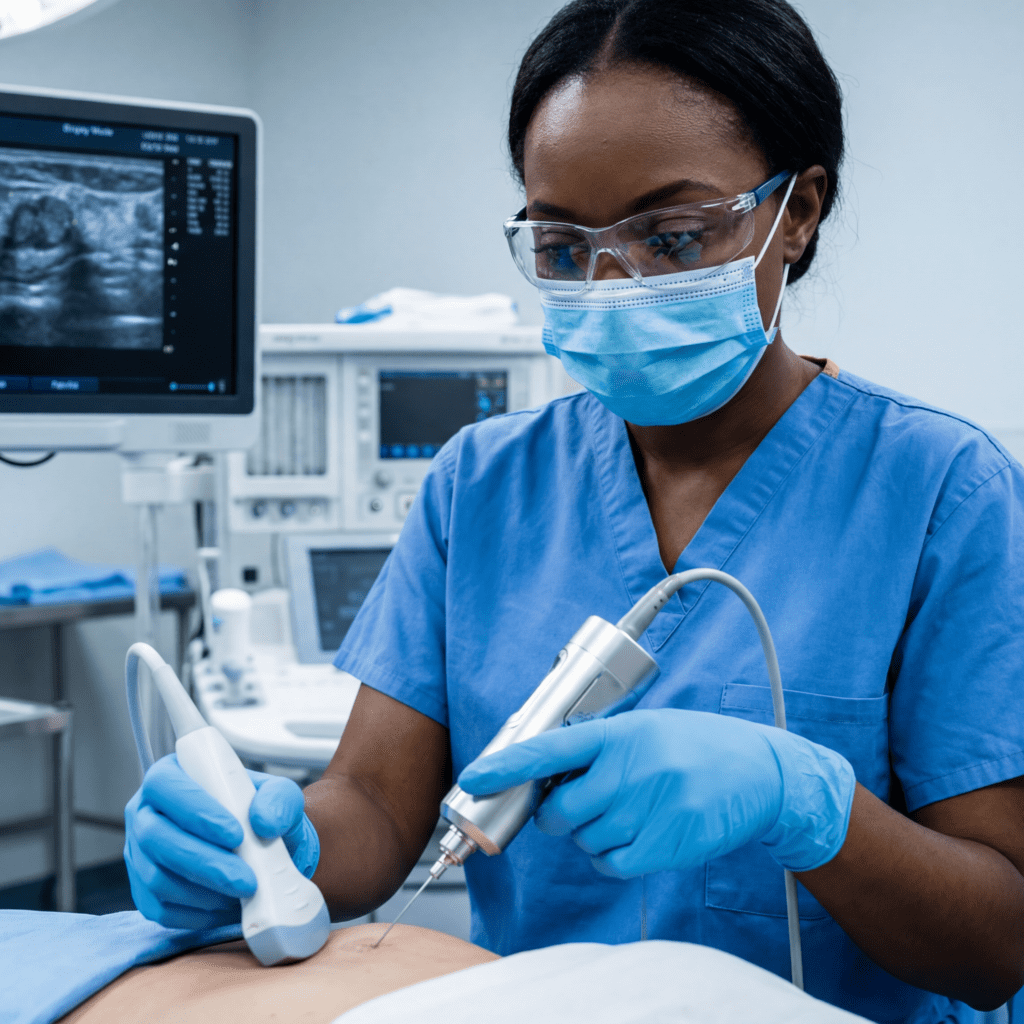
In all of these, the surrounding tissue is not disturbed in any meaningful way. Blood vessels in the area are not opened up to allow cancer cells to “escape” into the bloodstream. Oxygen in the air does not activate or accelerate cancer cell division. That is not how cancer biology works.
Why This Myth Hits Our Community Harder
African Americans already face higher incidence and mortality rates from several cancers — breast, prostate, lung, colon, and others. We already face barriers including lack of insurance, mistrust of the medical system, and limited access to specialists. We do not need an additional self-imposed barrier built on misinformation.
Research has consistently shown that Black patients are more likely to be diagnosed with cancer at later stages than white patients. Late-stage diagnoses dramatically reduce survival rates. For breast cancer, the five-year survival rate for localized disease is around 99%. Once it has spread to distant organs, that drops to 29%.
Biopsy refusal driven by this myth is one reason some of our community members show up at stage III or stage IV, when options are limited and outcomes are much harder.
Yes, the Tuskegee study happened. Yes, Black patients have historically been mistreated, undertreated, and dismissed by the medical system. That distrust is rooted in real history, and I understand it deeply as a Black physician. But refusing a biopsy does not protect you from a flawed system — it simply allows a potentially curable cancer to grow unchallenged.
What Happens If You Refuse a Biopsy?
When a patient refuses a biopsy, their doctor is left guessing. Imaging can tell us that something suspicious is present, but it cannot tell us with certainty whether it is benign or malignant, what type of cancer it might be, how aggressive it is, or what treatment would be most effective. Without that tissue diagnosis, we cannot give you the right treatment. We cannot give you any treatment with confidence.
Refusing a biopsy is not a safe middle ground. It is a decision to fly blind.
Real Conversations I Have Had
I had a patient — a 54-year-old Black woman — who found a lump in her breast and came to see me. Her mammogram was concerning. I referred her to a breast surgeon for a biopsy. She didn’t go. When her family finally convinced her to come back eighteen months later, the cancer had spread to her lymph nodes and liver. She told me, tearfully, that her sister had warned her the biopsy would spread it.
I have had men refuse prostate biopsies after an elevated PSA result for the same reason. Some came back a year later with cancer that had reached their bones.
I tell these stories not to frighten you, but because I have lived them, and they are preventable.
Talk to Your Doctor — Not Just Your Family
Family and community are essential to Black wellness. I believe that deeply. But when it comes to medical decisions, get your information from your physician, a nurse practitioner, or a verified medical source. Ask your doctor to explain what the biopsy involves, what the real risks are, and what happens if you choose not to have one. A good physician will walk you through it without judgment.
If you do not trust your doctor, find another one. You have that right. What you should not do is substitute a medical decision with a family legend — no matter how well-intentioned the person sharing it may be.
The Bottom Line
- Air does not cause cancer to spread. This is not a matter of debate in medicine.
- A biopsy is how we find cancer early, when it is most treatable.
- Delaying a biopsy out of fear allows cancer to grow and spread on its own.
- The real danger is not the procedure — it is the delay.
If your doctor recommends a biopsy, take a breath, ask your questions, and get it done. Early detection is still our most powerful weapon against cancer. Don’t let a myth take that weapon out of your hands.