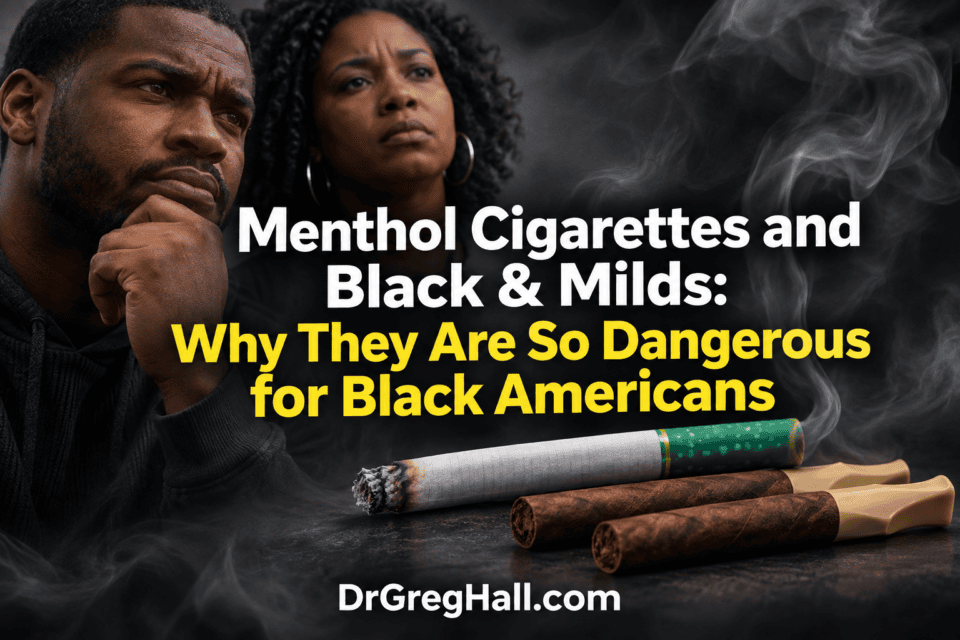

Walk into almost any corner store in a Black neighborhood and you will see them behind the counter: Newports and other menthol cigarettes, and rows of Black & Milds and other flavored little cigars, sold one at a time for a dollar or two. That is not an accident. For decades, tobacco companies have marketed these products directly to Black Americans, and our community has paid for it with our lives.
According to Truth Initiative, about 45,000 Black Americans die from smoking-related disease every year, and 39,000 die from tobacco-related cancers. Heart disease and cancer, the two leading causes of death for Black Americans, are both driven by smoking.
Menthol: easier to start, harder to quit
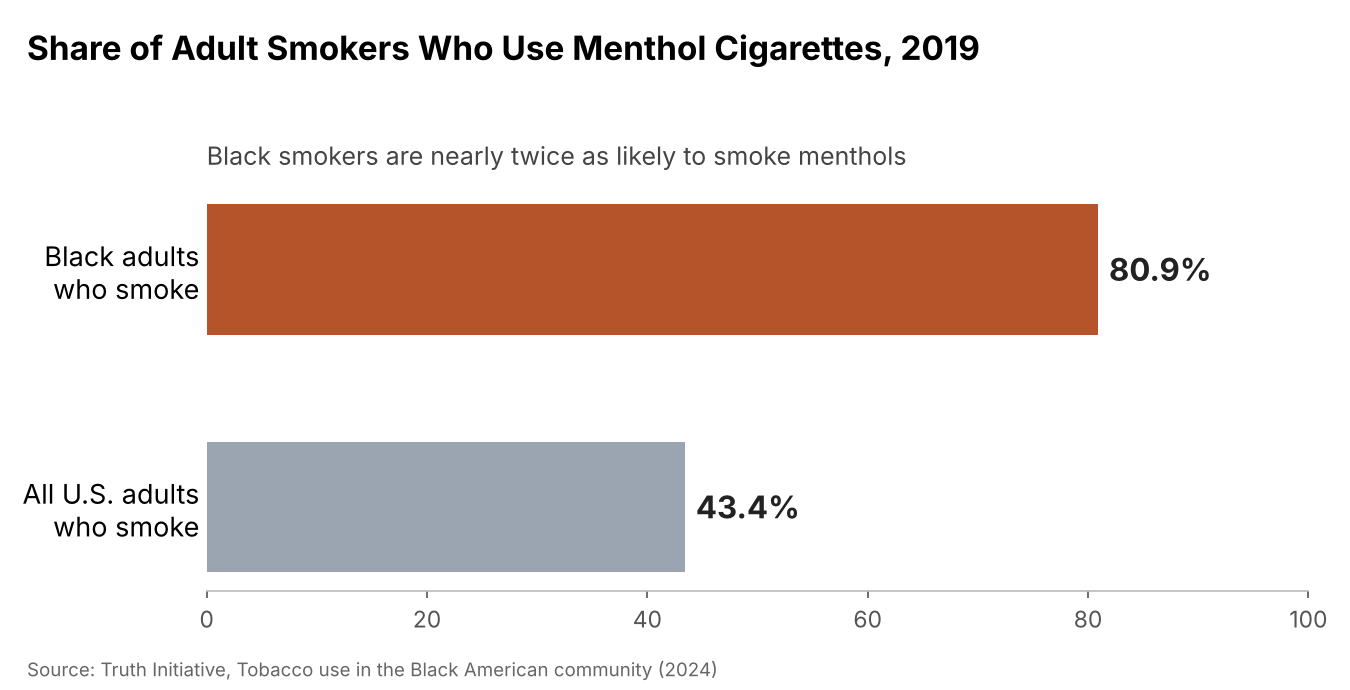
Menthol cools the throat and quiets the cough reflex, so smoke feels smoother and is easier to inhale deeply. That makes menthol cigarettes easier for young people to start, and research shows they are harder to quit. In 2019, 80.9 percent of Black adults who smoke used menthol cigarettes, compared with 43.4 percent of all adult smokers. Black menthol smokers are less likely to quit than other smokers, and have lower quit rates than Black smokers of non-menthol cigarettes.
Truth Initiative estimates that between 1980 and 2018, menthol cigarettes led to 1.5 million new Black smokers and 157,000 deaths among Black Americans. A simulation study in Tobacco Control projected that removing menthol cigarettes from the market would prevent hundreds of thousands of deaths, with Black Americans benefiting the most.
To be clear, menthol cigarettes have not been shown to cause more lung cancer than regular cigarettes, cigarette for cigarette. The danger is that menthol hooks people sooner and keeps them smoking longer, and the longer you smoke, the higher your risk.
Black & Milds and flavored little cigars
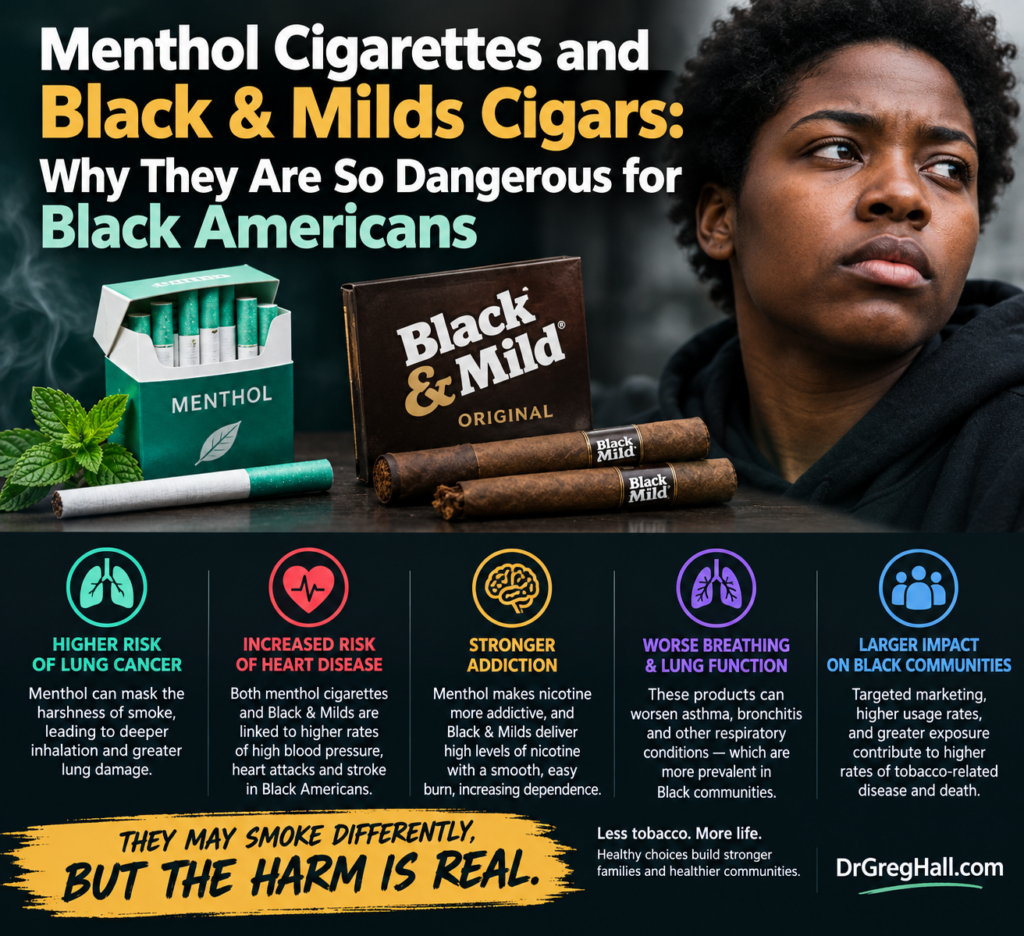
Little cigars and cigarillos such as Black & Milds come in flavors like wine, cream and apple, cost less than a pack of cigarettes, and are often sold individually. Many people, especially young adults, think they are safer than cigarettes. Students at a historically Black university described them as less harmful and more socially acceptable. That belief is wrong.
Cigar smoke contains the same toxic and cancer-causing chemicals as cigarette smoke, and cigars cause cancers of the mouth, throat, esophagus and lung. Little cigars are the same size as cigarettes, and many people inhale them like cigarettes, which raises the risk even more. Some people also empty cigarillos to roll marijuana blunts, adding tobacco smoke to every use.
Black Americans have the highest rates of cigar use of any group. Past-month cigar use among Black adults ages 21 and older rose from 6.7 percent in 2002 to 8.6 percent in 2019, even as it fell among white and Hispanic adults. In 2022, Black high school students were nearly twice as likely as their white classmates to smoke cigars.
Why menthol and flavored cigars are still on the shelves
Congress banned candy and fruit flavors in cigarettes in 2009 but left menthol out. In 2022, the FDA proposed rules to end menthol cigarettes and flavored cigars, but the proposals were withdrawn in January 2025. Here in Ohio, state lawmakers passed a law blocking cities from banning flavored tobacco. Columbus and 20 other Ohio cities challenged it, and the Ohio Supreme Court heard the case in June 2026. Until the law changes, protecting ourselves is up to us.
The precision medicine connection
Quitting is the single best thing a smoker can do for their health. Precision medicine can help match the right treatment and screening to the right person.
1. How fast you clear nicotine affects how you should quit
An enzyme called CYP2A6 breaks down nicotine, and gene variants make some people slow metabolizers and others fast. On average, Black smokers take in more nicotine per cigarette and clear it more slowly, and menthol itself may slow nicotine breakdown. A 2015 trial in The Lancet Respiratory Medicine found that smokers who clear nicotine at a normal rate did better with varenicline than with the nicotine patch, while slow metabolizers did as well with the patch and had fewer side effects. The blood test used in that study, the nicotine metabolite ratio, is not yet routine, but it shows why one quitting plan does not fit everyone.
2. Quit medicines work for Black smokers
Black smokers were underrepresented in the trials that led to approval of varenicline (Chantix). The KIS-IV trial, published in JAMA in 2022, tested it in 500 Black daily smokers. After six months, 16 percent of those on varenicline plus counseling had quit, compared with 7 percent on placebo, more than double. Medicine plus counseling works far better than willpower alone.
3. Lung cancer risk at fewer cigarettes
Black smokers often smoke fewer cigarettes per day than white smokers but get lung cancer at higher rates. A 2006 study in the New England Journal of Medicine found that at lower smoking levels, Black smokers had a higher risk of lung cancer than white smokers who smoked the same amount. Older screening rules missed many Black smokers for this reason. Since 2021, the U.S. Preventive Services Task Force recommends a yearly low-dose CT scan for adults 50 to 80 with a 20 pack-year history, and the American Cancer Society now recommends screening no matter how many years ago you quit. Ask your doctor whether you qualify, and read more in my article Lung Cancer in African Americans: Who Should Get Screened and Why It Matters.
4. Smoking changes how other medicines work
Tobacco smoke speeds up a liver enzyme (CYP1A2) that breaks down some medicines, including clozapine and olanzapine for mental illness and theophylline for lung disease. When you quit, levels of these medicines can rise quickly. Tell your doctor before you quit if you take any of them, so the dose can be adjusted. Smoking also uses up vitamin C. Read more in my article on vitamin C deficiency in African Americans.
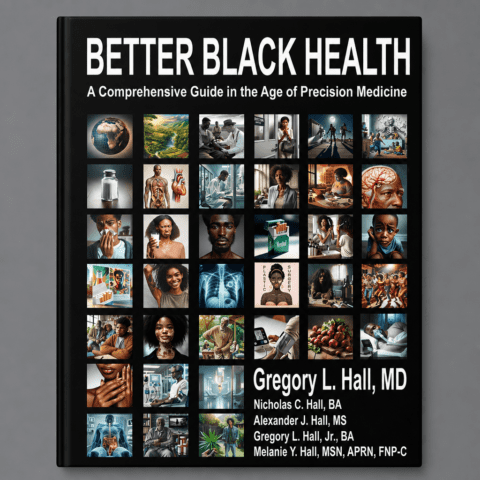
To learn more, read Better Black Health, written for patients and families. Clinicians can find a deeper review in Precision Medicine for African Americans (Springer, 2nd ed., 2025).
What you can do
- Call 1-800-QUIT-NOW for free coaching and, in many states, free nicotine replacement.
- Ask your doctor about varenicline, bupropion, or a combination of nicotine patch and gum or lozenge.
- Do not switch from menthols to Black & Milds or other little cigars. They are not a safer choice.
- If you are 50 or older and have smoked, ask whether you qualify for lung cancer screening.
- Keep your home and car smoke-free to protect your children from secondhand smoke.