

Why vitamin C matters
My Black patients know they should get more vitamin C, but many are not able to eat enough fruits and vegetables to get it. Vitamin C supports the immune system, helps the body absorb iron from plant foods, and is needed to make collagen, the protein that holds skin, blood vessels, and healing wounds together. The body cannot make vitamin C or store much of it, so we need it every day: 90 mg for men and 75 mg for women, plus 35 mg more for people who smoke.
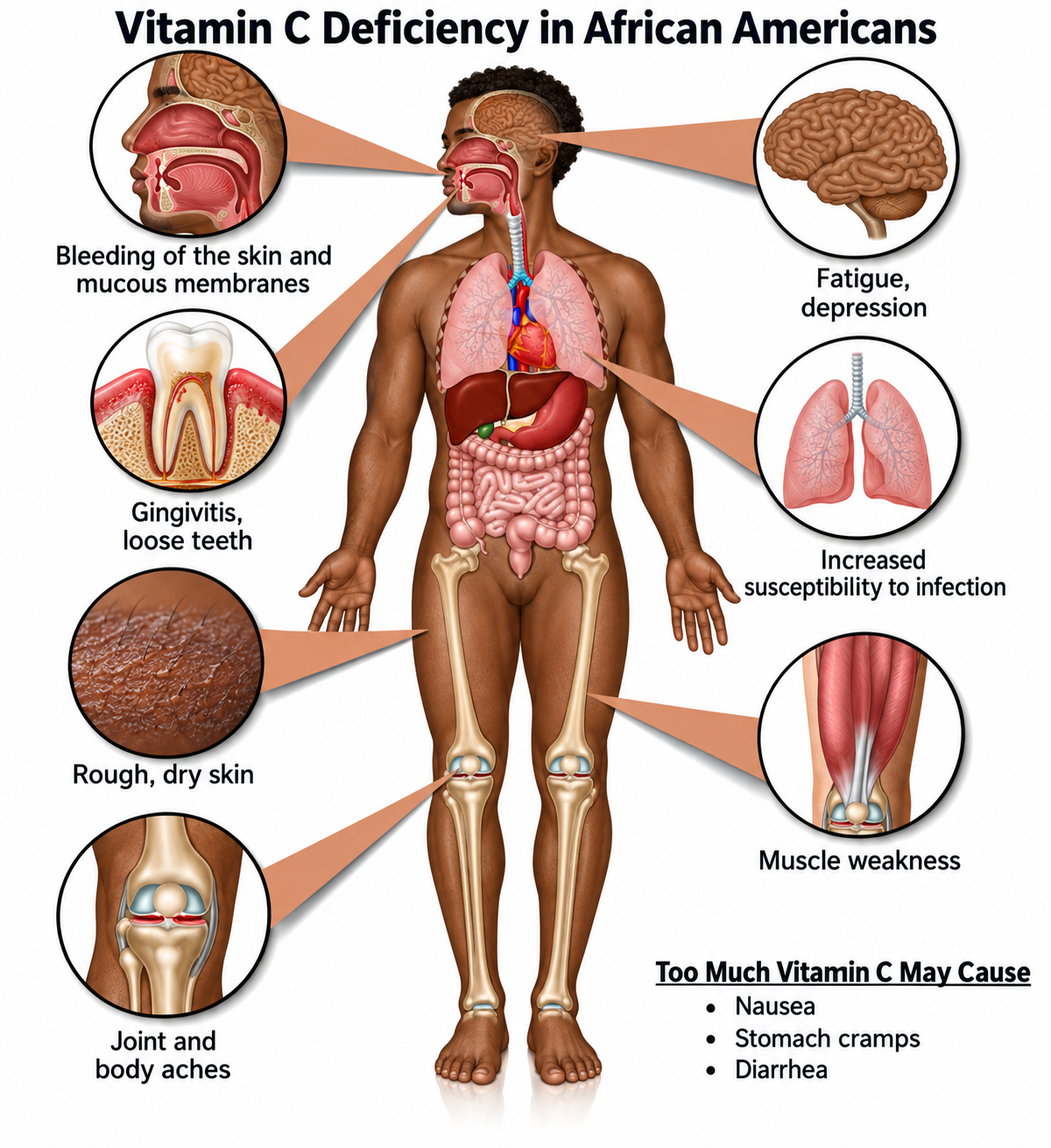
Low vitamin C can cause fatigue, bleeding gums, easy bruising, slow wound healing, and anemia, because vitamin C helps the body absorb iron. Severe deficiency causes scurvy, which still turns up in American hospitals today.
Are African Americans more likely to be low in vitamin C?
Not as a group. In the most recent national surveys (NHANES 2003–2006 and 2017–2018), about 6% of Black adults were deficient in vitamin C, compared with about 8% of White adults (Journal of Applied Laboratory Medicine, 2023). An earlier survey from 1988–1994 found Black adults slightly more likely to be deficient (American Journal of Public Health).
So race alone does not decide your vitamin C level. Your personal risk factors do, and several of them hit the Black community harder.
The precision medicine connection: who is really at risk
Precision medicine looks at you, not the average. These are the factors that predict low vitamin C, and what to do about each.
1. Smoking
About 15% of smokers are deficient in vitamin C, roughly twice the national rate. Cigarette smoke uses up vitamin C, which is why smokers need an extra 35 mg a day. Secondhand smoke lowers levels too. Quitting is the best fix; until then, make vitamin C-rich foods a daily habit.
2. Limited access to fresh food
USDA research shows Black households face far higher rates of food insecurity, often because of lower incomes and limited access to fresh produce in some neighborhoods. Cooking matters too: vitamin C breaks down with heat and leaches into cooking water, so greens that are boiled for a long time lose much of their vitamin C. Raw or lightly steamed fruits and vegetables keep the most.
3. Kidney disease, dialysis, and diabetes
Black Americans are more than three times as likely as White Americans to develop kidney failure. Dialysis removes vitamin C from the blood, and people with diabetes tend to have lower vitamin C levels. If you have either condition, ask your doctor whether your vitamin C level should be checked.
4. Your genes
The SLC23A1 gene makes the transporter that absorbs vitamin C from the gut and reclaims it in the kidneys. In a study of more than 15,000 people, a common variant in this gene was linked to lower blood vitamin C (American Journal of Clinical Nutrition, 2010). Variants in other genes, such as haptoglobin and the glutathione S-transferases, affect how quickly the body uses vitamin C up. These are not routine tests yet, but they help explain why two people eating the same diet can have different levels. If you are tired, bruise easily, or heal slowly, a simple blood test can measure your vitamin C.
5. G6PD deficiency: more is not always better
About 1 in 10 Black men in the U.S. has G6PD deficiency, an inherited condition that makes red blood cells fragile. Very high doses of vitamin C, especially the IV vitamin C drips offered at some wellness clinics, can trigger dangerous breakdown of red blood cells in people with G6PD deficiency. Doses above the 2,000 mg daily upper limit can also raise the risk of kidney stones, a special concern for people with kidney disease. Get tested for G6PD before any IV vitamin C. The amount in a daily multivitamin is not the concern.
Healing requires vitamin C
If you have a wound or simply don’t think you are healing like you did in the past, vitamin C deficiency may be contributing.

Foods highest in vitamin C include oranges, grapefruits, tangerines, strawberries, kiwi, broccoli, bell peppers, spinach, kale, and brussels sprouts. A cup of strawberries or half a cup of chopped red bell pepper covers a full day’s needs, and one orange covers most of it.
Ideally, you would eat more fruits and vegetables. When that is not a daily habit, a multivitamin designed for African Americans, like GNetX Sequence Multivitamins, can help fill the gap, particularly as we age.
Differences like these are covered in Better Black Health, written for patients and families, and Precision Medicine for African Americans (Springer Nature), written for clinicians.