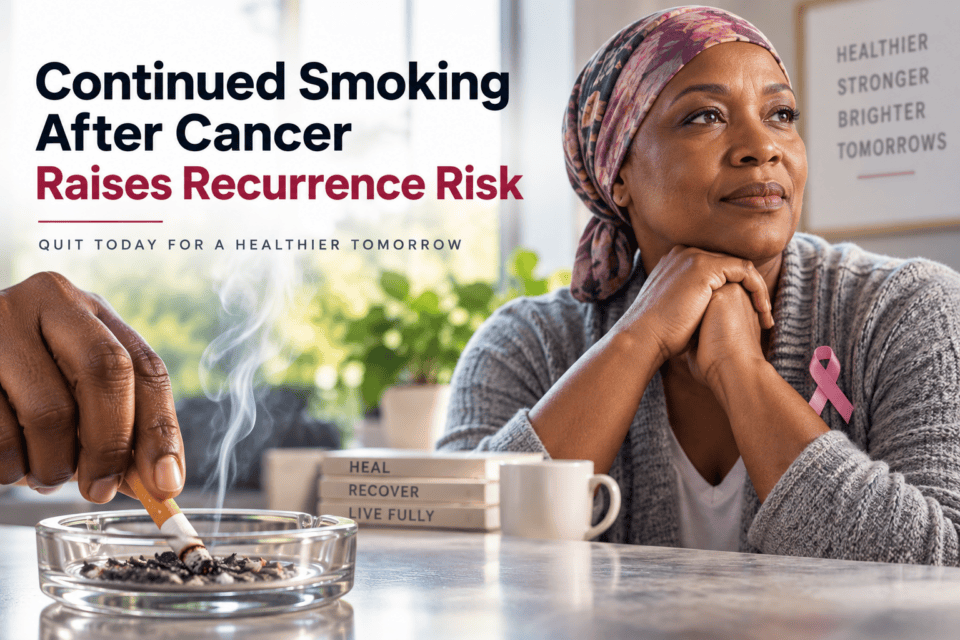

African American cancer survivors should make a deliberate effort to quit smoking. Continuing to smoke after a cancer diagnosis raises the risk of cancer recurrence and second cancers, and can make treatment less effective.
A study from Wayne State in Detroit found that Black cancer survivors were more likely to continue smoking after being diagnosed with cancer, and were far more likely to do so if their partner also smoked. A longer smoking history also raised the odds of continuing, while survivors with stronger social support were more likely to quit. Prostate cancer survivors were among the least likely to quit, while lung cancer survivors were among the most likely.
Don’t Start Smoking Again After You Recover from Cancer
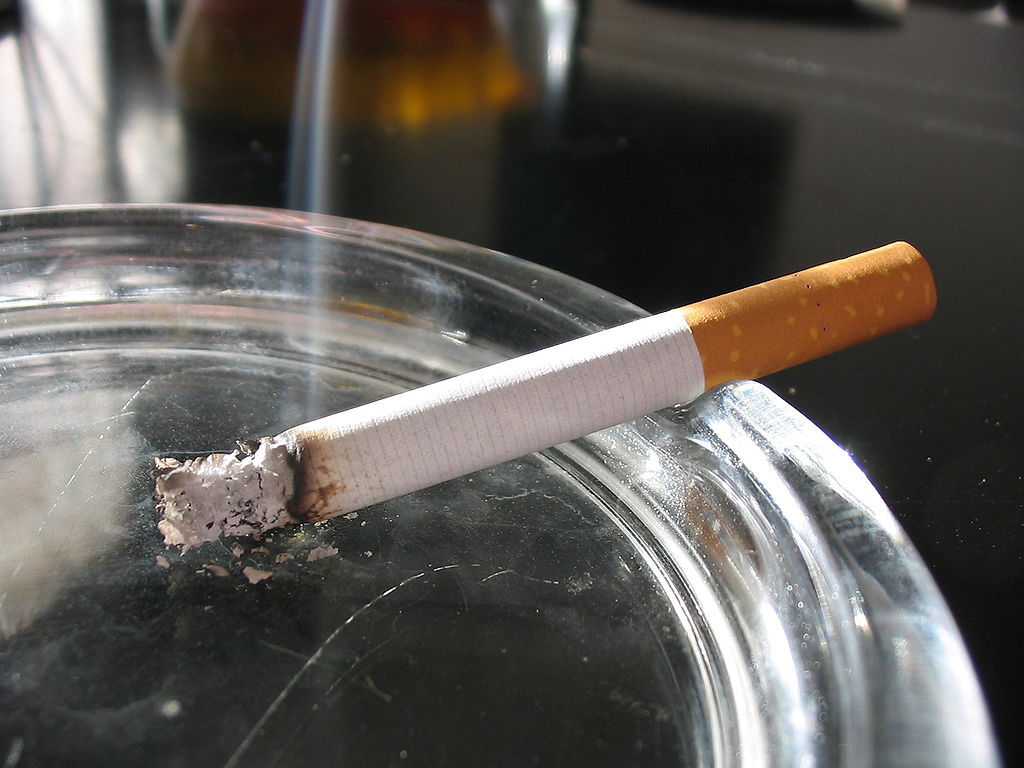
These patterns show up across other groups too — continued smoking after a cancer diagnosis is common, and it’s genuinely risky. Quitting has to stay a top priority, because continued smoking raises the risk of cancer recurrence and spread.
Doctors and nurse practitioners should stress quitting to both the patient and the people they live with. Since success rates are linked, a spouse, partner, or adult child who quits alongside the patient meaningfully improves the patient’s own odds.
How to Lower Your Cancer Recurrence Risk: Get Help Quitting
Quitting is hardest to do alone, especially soon after a cancer diagnosis. The federal government’s free quitline connects callers with trained coaches, and many cancer centers now build tobacco-treatment specialists into routine oncology care. Nicotine replacement therapy, prescription medication, and behavioral counseling each raise long-term quit rates on their own, and combining two or more works even better.
For African American survivors specifically, culturally competent support can address pressures this research points to directly, like living with a partner who still smokes. Resources like Better Black Health are built around exactly that kind of support. The payoff is real: every year without a cigarette lowers the odds of cancer recurrence a little more.
Take a listen to my podcast on menthol cigarettes and why they may be the worst type of cigarette.
And here is another Better Black Health podcast episode talking about how cigarettes may be contaminated by pesticides and may be why smoking raises your risk for diabetes.