
African American smokers have a higher risk for diabetes
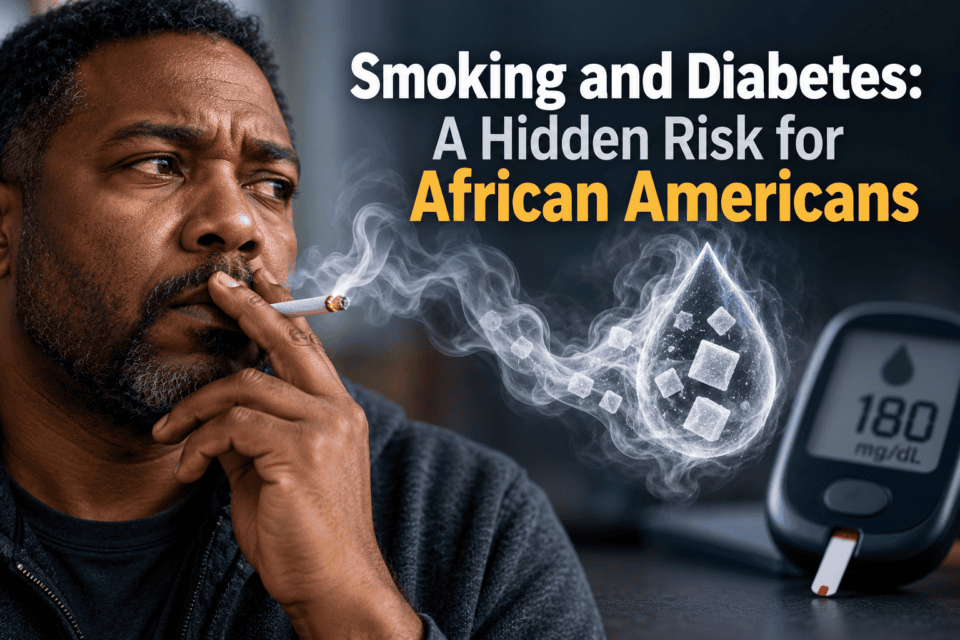
In the Jackson Heart Study, one of the largest long-term studies of Black adults in America, researchers followed nearly 3,000 African Americans without diabetes for about eight years. Those who smoked a pack or more a day developed diabetes at a 79% higher rate than people who never smoked. The findings were published in the Journal of the American Heart Association in 2018.

The study compared current smokers, former smokers, and people who never smoked. There was good news for people who quit: former smokers developed diabetes at about the same rate as never-smokers. Risk climbed with heavier smoking and with pack-years, the total amount smoked over a lifetime.
The extra risk in heavy smokers was tied to weaker pancreatic beta cell function. Beta cells in the pancreas make insulin, the hormone that moves sugar out of the blood and into the body’s cells. When beta cells struggle, blood sugar rises.
The researchers concluded:
“Although smoking cessation should be encouraged for everyone, certain high‐risk groups such as blacks who are disproportionately affected by diabetes mellitus should be targeted for cessation strategies.”
Are you at risk for diabetes?

Being overweight and having a strong family history of diabetes put many African Americans at higher risk for this disease. Heavy smoking belongs on that list too.
Smoking patterns add to the problem. Black teens smoke less than White teens, but Black adults tend to smoke for more years and have a harder time quitting. In a national survey cited by the study, 42% of Black adults newly diagnosed with diabetes were smokers, compared with 29% of White adults.
Many smokers worry that quitting will make them gain weight, and many underestimate how addictive nicotine is. But smoking promotes the “pot belly,” what doctors call visceral adiposity, and that deep belly fat greatly increases the risk for diabetes.
The precision medicine connection
Precision medicine asks how a risk, a test, or a treatment works for you: your genes, your biology, your background. For Black smokers, three answers matter.
1. The same cigarette can deliver a different dose
On average, Black smokers smoke fewer cigarettes a day than White smokers but take in more nicotine from each one and clear it from the body more slowly (JAMA, 1998). Part of the reason is genetic: variants in CYP2A6 and UGT2B10, genes that control how nicotine is broken down, are more common in people of African ancestry. Menthol, used by about 85% of Black smokers, can also slow nicotine breakdown. So “cigarettes per day” can understate a Black smoker’s real exposure. The Jackson Heart Study researchers themselves noted that genetic variation, which they did not measure, may play a role.
2. Quitting can be matched to your metabolism
A test called the nicotine metabolite ratio shows how fast your body breaks down nicotine. In a randomized trial of 1,246 smokers (Lancet Respiratory Medicine, 2015), normal (faster) metabolizers quit at a rate of 40% with varenicline (Chantix) versus 22% with the nicotine patch. Slow metabolizers did just as well on the patch, with fewer side effects. The test is not routine yet, but it shows why one quit-smoking plan does not fit everyone.
3. Make sure your diabetes test is accurate for you
The A1c test is the most common diabetes screen, but it can read falsely low in people with sickle cell trait (about 1 in 13 Black Americans) or G6PD deficiency, both more common in people of African ancestry. A falsely low A1c can delay a diagnosis. If you smoke and diabetes runs in your family, ask your doctor whether a fasting glucose or glucose tolerance test should be added.
These are the kinds of differences covered in Better Black Health, written for patients and families, and Precision Medicine for African Americans (Springer Nature), written for clinicians.
The bottom line
If diabetes runs in your family and you or someone you love smokes, share this: quitting now can lower the risk of developing diabetes. Ask your doctor about the quit-smoking treatment that fits your body and the diabetes test that fits your biology.
Want to learn more? Read about diabetes differences in African Americans.