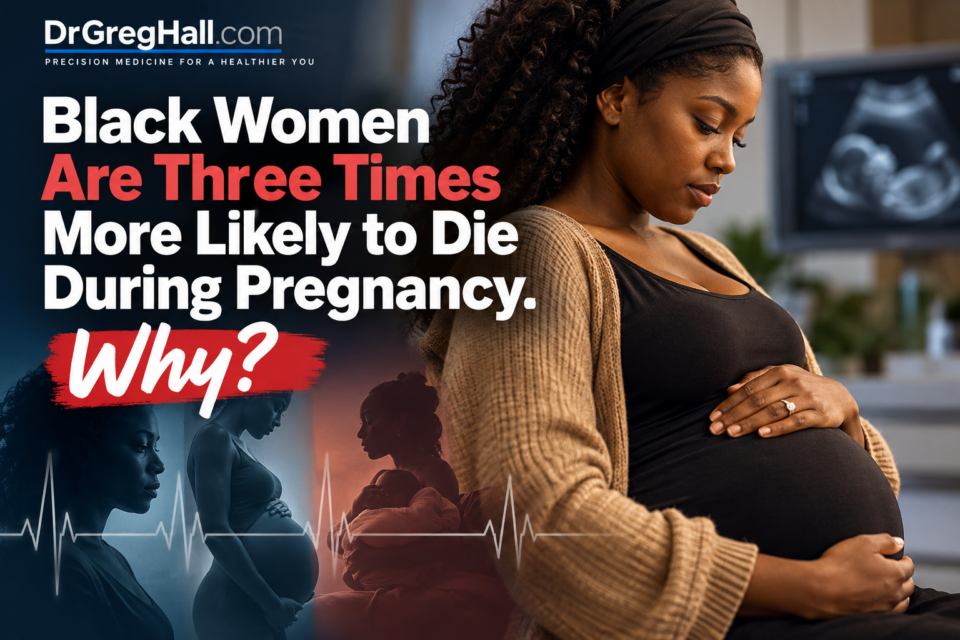

In 2024, Black women in the United States died during pregnancy or within six weeks after at a rate of 44.8 per 100,000 live births. For White women, the rate was 14.2. That is about 3.2 times higher, and the gap has held for decades.
Most of these deaths can be stopped. When state review committees examined more than 1,000 pregnancy-related deaths, they judged more than 84% to be preventable.
It is tempting to see this as a problem for obstetricians alone. It is not. Most of the conditions that kill Black mothers are heart, blood pressure and blood clotting problems. Many begin before pregnancy and continue long after delivery. Primary care doctors, cardiologists, emergency physicians and the women themselves all have a role.
Here are the major contributors, and what we can do about each one.
1. High blood pressure and preeclampsia
Preeclampsia is dangerously high blood pressure that develops during pregnancy, usually after 20 weeks. It can damage the kidneys, liver and brain and can lead to seizures or stroke. The U.S. Preventive Services Task Force notes that Black women are at greater risk of preeclampsia than other women and have higher rates of complications from it. In CDC data, preeclampsia and eclampsia caused 11.4% of pregnancy-related deaths among Black women.
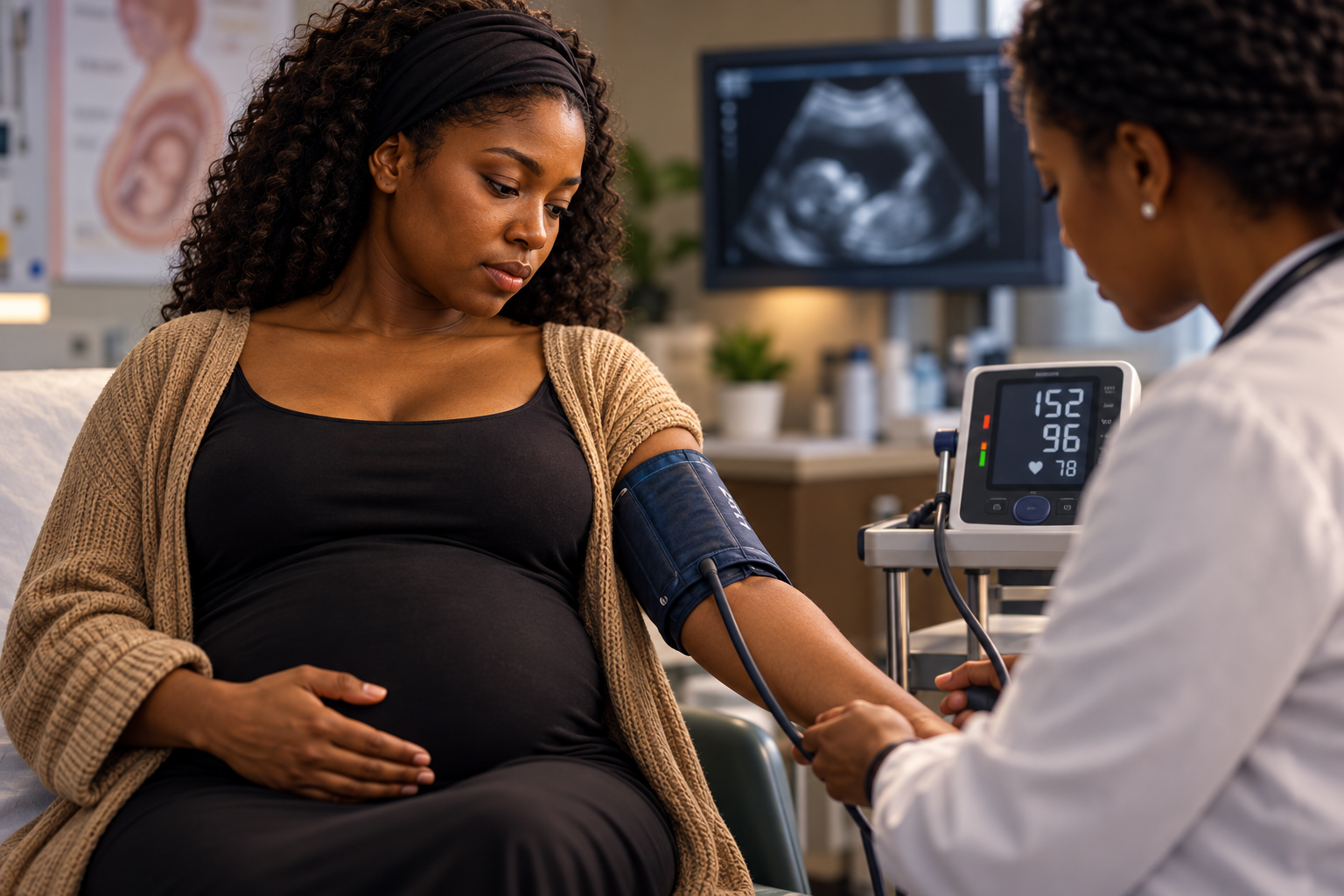
The risk is not only about pregnancy. Many Black women enter pregnancy with chronic high blood pressure, which is itself a high-risk factor for preeclampsia. Blood pressure that is well controlled before conception is one of the best protections a woman can have.
Environment matters too. In a Boston study, U.S.-born Black women had preeclampsia rates of 12.4%, compared with about 8% for Black women who had immigrated to the U.S. Something about living in America raises the risk.
A simple step that is often missed. The Task Force recommends low-dose aspirin (81 mg daily) after 12 weeks for women at high risk of preeclampsia. Being Black is listed as a moderate risk factor. A Black woman with one more moderate risk factor, such as a first pregnancy, obesity, age 35 or older, or a family history of preeclampsia, should be considered for aspirin. Many eligible women are never offered it. Ask.
2. Cardiomyopathy and other heart disease
Heart disease is the leading cause of pregnancy-related death for Black women. In CDC review committee data from 2017 to 2019, cardiac and coronary conditions caused 15.9% of these deaths and cardiomyopathy another 13.9%. An earlier CDC analysis found that cardiomyopathy contributed disproportionately to deaths among Black women.
Cardiomyopathy means the heart muscle is weakened and cannot pump well. One form, peripartum cardiomyopathy, develops in the last month of pregnancy or in the months after delivery. Its early symptoms look a lot like a normal pregnancy: shortness of breath, swelling in the legs, fatigue, trouble lying flat. That overlap is exactly why it gets missed. Research consistently finds that peripartum cardiomyopathy is more common in Black women, who also tend to have worse outcomes.
Genetics plays a part. Some women with peripartum cardiomyopathy carry the same gene variants found in inherited forms of heart failure. A family history of cardiomyopathy, heart failure or sudden death at a young age is important information to share with your doctor before and during pregnancy.
Chronic high blood pressure, obesity and diabetes, all more common among Black women, also strain the heart. Pregnancy increases the heart’s workload by 30% to 50%, and it can expose a heart that was already struggling.
3. Blood clots and pulmonary embolism
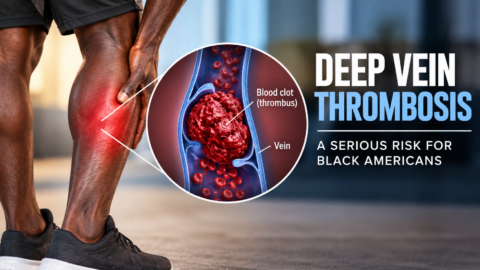
Pregnancy makes blood clot more easily. That protects against bleeding at delivery, but it also raises the risk of a clot forming in the legs (deep vein thrombosis) and traveling to the lungs (pulmonary embolism). CDC analyses found that thrombotic pulmonary embolism contributed disproportionately to pregnancy-related deaths among Black women, and it accounted for 11.9% of these deaths in 2017 to 2019.

Cesarean delivery, obesity, older age and long periods of bed rest all raise the risk. So may sickle cell trait, which about 8% of African Americans carry. In one study, pregnant Black women with sickle cell trait had about three times the risk of a blood clot compared with those without it. The study was small, but it is a reason to know your sickle cell trait status and share it with your obstetrician.
Warning signs: swelling, pain or warmth in one leg; sudden shortness of breath; chest pain that worsens with a deep breath; a racing heart; coughing up blood. These need emergency care, even weeks after delivery.
4. Severe bleeding
Heavy bleeding after delivery, called postpartum hemorrhage, caused 10.8% of pregnancy-related deaths among Black women in CDC data. What stands out is not how often Black women bleed, but how often bleeding turns deadly.
A national study of more than 360,000 women with postpartum hemorrhage found that Black women were more likely to need transfusion (19.4% vs. 13.9%) and hysterectomy than White women. Their death rate after hemorrhage was about five times higher: 121.8 per 100,000 deliveries, compared with 24.1 for other women. Those differences held after accounting for other health conditions.
One contributor is uterine fibroids. Black women are up to three times more likely to develop fibroids, and their fibroids tend to be larger and more numerous. Fibroids can keep the uterus from clamping down after delivery. Anemia going into delivery leaves less reserve if bleeding starts.
If you have fibroids or anemia, make sure your delivery team knows, and ask whether your hospital has a hemorrhage plan ready.

5. Symptoms recognized too late
Most people picture pregnancy-related death happening in the delivery room. Usually it does not. In CDC review data, only 13.2% of deaths occurred on the day of delivery. Another 23.3% occurred 7 to 42 days after delivery, and 30.0% occurred between six weeks and one year after. More than half of all deaths happened after the first week, when a new mother is at home and her care has shifted from her obstetrician to whoever she happens to see.
That is where recognition breaks down. A new mother with shortness of breath may be told she is tired. A headache may be blamed on lack of sleep. Leg swelling may be called normal. Each of these can be the first sign of preeclampsia that has appeared after delivery, cardiomyopathy or a blood clot.
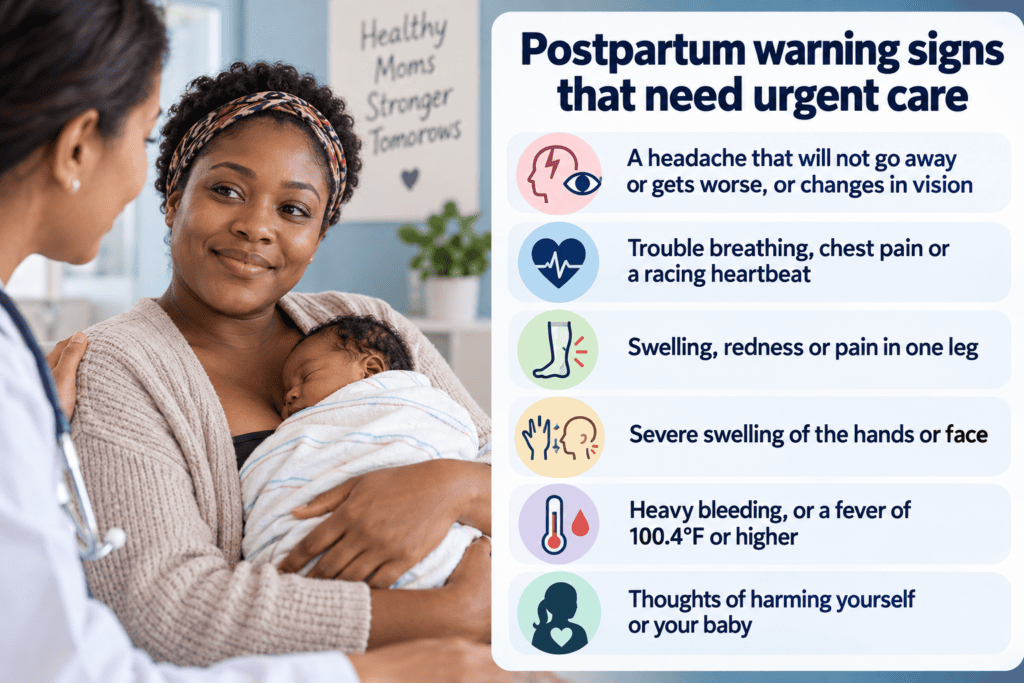
Coverage matters here too. Ohio now provides Medicaid coverage for a full 12 months after pregnancy, up from 60 days. Women should use that year to keep seeing their doctors, especially if they had high blood pressure, preeclampsia or gestational diabetes.
6. Differences in care
If poverty alone explained this gap, education and income would close it. They do not. A CDC analysis found that Black women with a college degree died from pregnancy-related causes at 5.2 times the rate of college-educated White women, and at a higher rate than White women who had not finished high school. Among women 30 and older, the gap widened to four to five times.
Part of the explanation is health going into pregnancy: more chronic high blood pressure, obesity, diabetes and fibroids, often starting at younger ages. Part is genetics and ancestry, such as sickle cell trait and the inherited heart conditions described above. And part is the care women receive once they are pregnant or postpartum. The hemorrhage study above found worse outcomes for Black women even after accounting for other health conditions. Black women also commonly report that their symptoms were dismissed or minimized.
The Task Force put it plainly when it explained why Black women face higher preeclampsia risk: the cause is “environmental, social, and historical inequities” affecting exposures, access to care and resources. Whatever the mix of causes, the practical lesson is the same. Being a Black woman is a reason for clinicians to pay closer attention, not less.
The precision medicine connection
Many of these risks can be spotted early when ancestry and family history guide the questions doctors ask. Here is where precision medicine fits.
1. Heart failure genes and peripartum cardiomyopathy
In a study of 172 women with peripartum cardiomyopathy, 15% carried a disruptive variant in a heart muscle gene, most often TTN, compared with 4.7% of the general population. That is about the same rate seen in inherited dilated cardiomyopathy. A woman who develops peripartum cardiomyopathy should be offered genetic testing, and her close relatives may need heart screening too.
2. APOL1 and preeclampsia: the baby’s genes matter
About 13% of African Americans carry two high-risk copies of the APOL1 gene, best known for raising the risk of kidney failure. The gene is also active in the placenta. In a study of Black women, preeclampsia was nearly twice as likely when the baby carried two high-risk copies, while the mother’s own APOL1 genes made no difference. This is one more reason to watch blood pressure closely in every Black pregnancy.
3. Lab values that read differently
BNP and NT-proBNP, blood tests used to screen for heart failure, run lower in Black adults. A borderline value in a Black woman with shortness of breath after delivery should not end the search for cardiomyopathy. An echocardiogram can settle the question. Sickle cell trait, carried by about 8% of African Americans, may also raise the risk of blood clots in pregnancy, so it belongs in the prenatal history.
4. Know the safety limits
ACE inhibitors and ARBs, common blood pressure medicines, can harm a developing baby. Women taking them should talk with their doctor before trying to conceive and stop them as soon as pregnancy is confirmed. Other medicines, such as labetalol and nifedipine, are safe options. Treating even mild chronic high blood pressure helps: in the CHAP trial, keeping pregnant women’s blood pressure below 140/90 lowered serious complications from 37.0% to 30.2%. Read more about blood pressure medicine for African Americans.
What women and families can do
- Get healthy before pregnancy if you can. See your doctor to get blood pressure, blood sugar and weight under control before you conceive.
- Know your risks. Know whether you carry sickle cell trait, whether you have fibroids, and whether anyone in your family has had preeclampsia, heart failure or blood clots. Tell your obstetrician.
- Ask about aspirin. If you have risk factors for preeclampsia, ask whether low-dose aspirin is right for you after 12 weeks.
- Check your blood pressure at home, during pregnancy and for weeks after delivery.
- Treat the first year after delivery as part of pregnancy. Keep your follow-up appointments. If you see any doctor for any reason, tell them you were recently pregnant.
- Speak up, and bring someone who will. If something feels wrong and you are not being heard, say so directly: “I am worried this could be preeclampsia, a heart problem or a blood clot. What have you done to rule that out?”
What clinicians can do
- Screen every Black pregnant patient for aspirin eligibility, and offer it when criteria are met.
- Take shortness of breath, swelling and fatigue seriously in late pregnancy and postpartum, and check a BNP or echocardiogram when the picture does not fit. Natriuretic peptide levels run lower in Black adults, so a borderline value should not end the workup.
- Ask about sickle cell trait, fibroids and family history of cardiomyopathy and clotting at the first prenatal visit.
- In the emergency department and primary care, ask every woman of reproductive age whether she has been pregnant in the past year.
- Arrange a blood pressure check within the first week or two after a hypertensive pregnancy, and keep cardiovascular follow-up going for the full postpartum year.
The numbers are stark, but they are not fixed. Most of these deaths are preventable, and the tools to prevent them already exist. What is needed is earlier recognition, closer attention and care that takes Black women’s symptoms seriously from the first visit through the first year after delivery.
Sources
- National Center for Health Statistics. Maternal Mortality Rates in the United States, 2024. Health E-Stat 113.
- CDC. Pregnancy-Related Deaths: Data from Maternal Mortality Review Committees in 36 U.S. States, 2017–2019.
- Davis NL, Smoots AN, Goodman DA. Pregnancy-Related Deaths: Data from 14 U.S. Maternal Mortality Review Committees, 2008–2017. CDC; 2019.
- Petersen EE, et al. Racial/Ethnic Disparities in Pregnancy-Related Deaths — United States, 2007–2016. MMWR. 2019;68(35).
- U.S. Preventive Services Task Force. Aspirin Use to Prevent Preeclampsia and Related Morbidity and Mortality. 2021.
- Johns Hopkins Medicine. U.S.-Born Black Women at Higher Risk of Preeclampsia than Foreign-Born Counterparts. December 2021.
- Racial Disparities in U.S. Peripartum Cardiomyopathy: Systematic Review and Meta-Analysis of Risk Factors and Outcomes. JACC: Advances. 2026.
- Ware JS, et al. Shared Genetic Predisposition in Peripartum and Dilated Cardiomyopathies. N Engl J Med. 2016.
- Oni O, et al. Risk of Pregnancy-Related Venous Thromboembolism in Black Women with Sickle Cell Trait. Blood. 2021.
- Gyamfi-Bannerman C, et al. Postpartum hemorrhage outcomes and race. Am J Obstet Gynecol. 2018. Summary.
- Mayo Clinic News Network. Black Women and Uterine Fibroids.
- Centers for Medicare & Medicaid Services. HHS Approves 12-Month Extension of Postpartum Medicaid and CHIP Coverage in Hawaii, Maryland, and Ohio. August 2022.
- Gupta DK, et al. Racial Differences in Natriuretic Peptide Levels: The Dallas Heart Study. JACC: Heart Failure. 2015.
- Reidy KJ, et al. Fetal—Not Maternal—APOL1 Genotype Associated with Risk for Preeclampsia in Those with African Ancestry. Am J Hum Genet. 2018.
- Tita AT, et al. Treatment for Mild Chronic Hypertension during Pregnancy (CHAP). N Engl J Med. 2022.