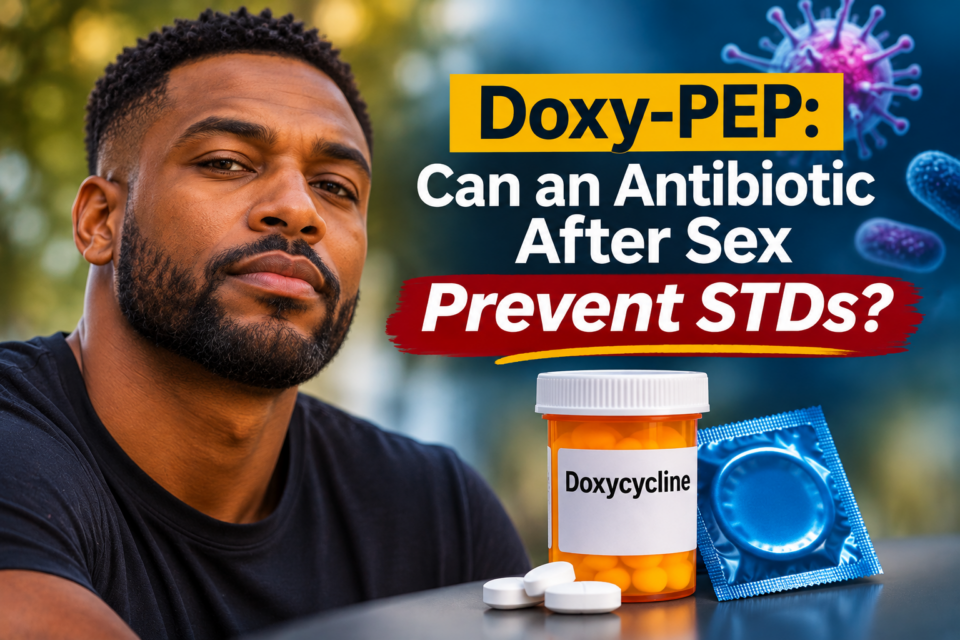

There is a new tool for preventing sexually transmitted diseases (STDs), and many people have never heard of it. It is called doxy-PEP: taking a common antibiotic, doxycycline, after sex to lower the chance of catching chlamydia, syphilis or gonorrhea. Some people call it the “morning-after pill for STDs.” It works well for some people, it is not right for everyone, and there is a growing problem with gonorrhea that you should know about. Here is what you need to know about doxy-PEP for Black Americans, and how it fits into the effort to lower high rates of STDs in African Americans.
What is doxy-PEP?
PEP stands for post-exposure prophylaxis, which means medicine taken after a possible exposure to prevent infection. With doxy-PEP, a person takes a single 200 mg dose of doxycycline within 72 hours after oral, anal or vaginal sex without a condom. The antibiotic can stop bacteria from taking hold before an infection starts. Doxycycline has been used safely for decades to treat infections, acne and Lyme disease, and it is inexpensive.
Doxy-PEP only works against bacterial STDs. It does not prevent HIV, herpes, HPV or mpox.
How well does it work?
In the DoxyPEP study of gay and bisexual men and transgender women in San Francisco and Seattle, taking doxycycline after sex lowered chlamydia by 74% to 88%, syphilis by 77% to 87%, and gonorrhea by about 55%, compared with not taking it. A French study found similar results. Based on that evidence, the CDC issued its first doxy-PEP guidelines in 2024.
Real-world results are encouraging for chlamydia and syphilis. A large 2026 study of more than 26,000 people in Southern California found doxy-PEP was about 67% effective against chlamydia and 61% effective against syphilis. Gonorrhea is a different story, which I explain below.
Why doxy-PEP matters for African Americans
Black Americans have the highest reported rates of chlamydia, gonorrhea and syphilis in the country. As I wrote in my article on chlamydia, the chlamydia rate in Black Americans is more than six times the rate in White Americans. Syphilis has also risen sharply in recent years, including syphilis passed from mother to baby. Any tool that safely lowers these infections deserves attention in our community.
But new tools only help the people who get them. A study from a Southeastern HIV and PrEP clinic found that among patients who qualified for doxy-PEP but were not offered it, a disproportionate share were Black or had public insurance or no insurance. If you qualify, ask for it.
Who should consider doxy-PEP?
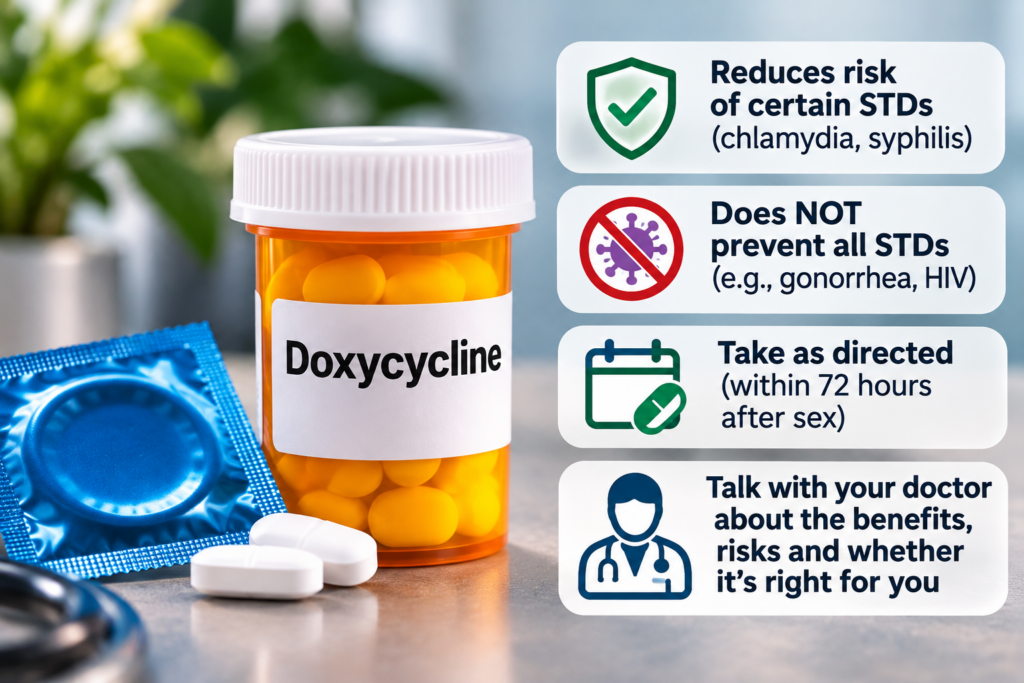
The CDC recommends that doctors offer doxy-PEP to gay, bisexual and other men who have sex with men, and to transgender women, who had syphilis, chlamydia or gonorrhea in the past 12 months. For everyone else, the CDC leaves it to the judgment of the doctor and patient.
What about women? A study of cisgender women in Kenya did not show a clear benefit, although many women in that study were not actually taking the pills, so the question is not settled. In 2026, San Francisco expanded its guidance so doctors can offer doxy-PEP to women with a recent bacterial STD or other risk factors. If you are a woman who has had repeat STDs, it is reasonable to talk with your doctor about whether it makes sense for you.
How to take it
- Take 200 mg of doxycycline (usually two 100 mg pills) as soon as possible after sex, ideally within 24 hours and no later than 72 hours.
- Take no more than 200 mg in any 24-hour period, even if you have sex more than once.
- Swallow it with a full glass of water and stay upright for at least 30 minutes to protect your esophagus.
- Get tested for STDs every 3 to 6 months while using doxy-PEP, and see your doctor regularly to decide whether you still need it.
- Doxy-PEP requires a prescription. Do not use leftover or borrowed antibiotics.
The gonorrhea problem: antibiotic resistance
Using an antibiotic often gives bacteria more chances to learn how to survive it. That is now happening with gonorrhea. A national analysis published in 2025 found that a gene that helps gonorrhea resist doxycycline went from fewer than 10% of samples in 2018 to more than 30% in 2024. In the Southern California study, doxy-PEP was about 42% effective against gonorrhea in early 2023, but by mid-2025 it no longer protected against gonorrhea at all.
Doxy-PEP still works well against chlamydia and syphilis, and experts still support it for people at high risk. But it is not a reason to skip testing, and it should be used only by people who truly need it.
What doxy-PEP does not replace
- Condoms, which protect against many STDs, including HIV.
- HIV PrEP, the daily pill or long-acting shot that prevents HIV.
- Vaccines for HPV, hepatitis B and mpox.
- Regular testing, since many STDs have no symptoms.
The precision medicine connection
Doxy-PEP is a good example of why prevention should be fitted to the person. Here are five points worth knowing.
1. Make sure you are not overlooked
Studies show Black patients who qualify for doxy-PEP are more likely to be missed. If you have had a bacterial STD in the past year, bring up doxy-PEP yourself at your next visit.
2. Women may respond differently
The evidence for doxy-PEP comes mostly from men and transgender women. The only completed trial in cisgender women did not show a clear benefit. Black women also have higher rates of bacterial vaginosis, which raises the risk of catching STDs, and doxy-PEP does not treat or prevent it. Women considering doxy-PEP should make the decision with their doctor.
3. Vitamin D3 and zinc: support your immune system, but time them right
Doxy-PEP is one layer of protection. Good nutrition is another. Low vitamin D is very common in Black Americans: in one national study, 82% of Black adults were deficient, and levels run especially low in northern cities like Cleveland. Vitamin D helps the immune system fight infections, and a 2024 study linked vitamin D deficiency to a higher risk of chlamydia and to treatment failure. I recommend that most Black adults take 2,000 IU of vitamin D3 daily. Zinc also supports immune function, and low zinc is common in diets short on fruits, vegetables, beans and whole grains.
Timing matters. Zinc, calcium, iron, magnesium and aluminum bind to doxycycline in the stomach and keep it from being absorbed. That includes zinc supplements, antacids and multivitamins with minerals, including my own GNetX Sequence multivitamin. Take doxycycline at least 2 hours before these products, or several hours after, and ask your pharmacist about the best timing. Vitamin D3 by itself does not interfere, unless it is combined with calcium. Supplements support your health, but they do not replace doxy-PEP, condoms or testing. Stay within safe limits: no more than 40 mg of zinc or 4,000 IU of vitamin D a day unless your doctor advises otherwise.
4. Know the safety limits
Doxycycline should not be used during pregnancy. It can cause nausea and can make your skin sunburn more easily, whatever your skin tone, so use sunscreen. Taking it without enough water or lying down too soon can irritate the esophagus. Tell your doctor about all your medicines before starting.
5. Testing still matters
Because gonorrhea resistance varies from place to place and is rising, regular testing is the only way to know whether an infection got through. Any positive test should be treated with the antibiotic your doctor recommends, which for gonorrhea is not doxycycline.
I cover many of these topics in more depth in my books: Better Black Health for patients and families, and Precision Medicine for African Americans for clinicians.