

There is an understandable fear in medicine about linking genetics to the health of Black Americans. The worry goes like this: if we say Black people have an inherited risk for a disease, someone will conclude, “Well, that’s just how it is. Nothing can be done.” Pointing to racism and the social conditions that shape health feels safer, because those can be changed.
I share the goal behind that fear. But the logic is backwards.
An inherited risk you know about is one of the most actionable facts in medicine. It tells a doctor what to test for, when to start screening, which drug to choose and which lab result to question. Fatalism does not come from knowing about genetic risk. It comes from not knowing: the heart failure that was never recognized as inherited, the kidney disease that was found too late, the cancer that was screened for five years after it began.
Genetic risk is not destiny. It is a target.
Both, not either
Let me be clear about what I am not saying. Racism, poverty, neighborhood, access to care and the stress of discrimination drive most of the health gaps Black Americans face. Those causes are real and they are fixable. Public health work that targets them saves lives, and I have spent much of my career in that work.
But genes and environment are not competing explanations. They work together. Consider preeclampsia. In a Boston study of more than 6,000 mothers, Black women had the highest rate of preeclampsia, 12.4%. Yet Black women who had immigrated to the U.S. within the past 10 years had a rate of about 8%, and foreign-born Black women had 26% lower odds than those born here. Similar ancestry, different environments, different outcomes. Environment clearly matters.
At the same time, inherited variants such as APOL1 help determine which Black patients develop kidney disease when exposed to the same conditions. Most people with high-risk APOL1 genes never develop kidney failure. Something else, a “second hit” such as high blood pressure, diabetes or infection, usually has to happen. That is exactly why knowing the gene matters: it tells you whose blood pressure and blood sugar most need protecting.
Here is how I put it:
Social determinants explain why the gap exists. Genetics helps explain who, within that gap, is at greatest risk. We need both to close it.
What knowing changes
Every inherited risk below is more common in people of African ancestry. Look at the right-hand column. Not one of them says “nothing can be done.”
| Inherited risk | What it raises | What knowing it lets us do |
|---|---|---|
| APOL1 high-risk genes (about 13% of Black Americans) | Kidney disease and kidney failure | Check kidney function and urine protein earlier, control blood pressure tightly, inform living-donor decisions |
| TTR V122I (about 3% to 4%) | Hereditary amyloid heart disease | Recognize it instead of calling it ordinary heart failure, and start a drug that slows it |
| High lipoprotein(a) (highest median levels of any group) | Heart attack, stroke, aortic valve disease | Measure it once, then treat cholesterol and blood pressure more aggressively |
| Darker skin pigmentation, an inherited trait that reduces how much vitamin D the skin makes from sunlight (82% of Black adults had low levels in national data) | Low vitamin D, linked to bone loss and associated with diabetes, high blood pressure and some cancers | Check a vitamin D level and supplement when it is low, especially in northern states and in winter (see my vitamin D guide) |
| Prostate cancer risk variants, such as those in the 8q24 region | Earlier, more aggressive prostate cancer | Start PSA screening at 40, test every year, and offer genetic testing (such as BRCA2) when family history fits |
| Duffy-null (about two-thirds) | Lower white blood cell counts that are normal, not disease | Avoid needless workups and keep patients eligible for cancer treatment and trials |
| Sickle cell trait and G6PD deficiency | HbA1c that reads falsely low; reactions to certain drugs (G6PD) | Confirm diabetes with glucose testing; check G6PD before certain medications |
| Medicine-response genes, such as HLA-B*58:01 (about 4% of African Americans) and CYP3A5 (most African Americans) | Severe skin reaction to allopurinol (gout); too-low levels of tacrolimus (transplant drug) on standard doses | Test HLA-B*58:01 before allopurinol; use gene-guided tacrolimus dosing after a transplant |
| Glaucoma (strong family pattern; almost 3 times as common) | Silent optic nerve damage and vision loss | Dilated eye exams starting at 40; pressure-lowering eye drops when needed, which cut the risk of developing glaucoma about in half in a national study |
| Alpha-thalassemia trait (very common in African ancestry) | Small red blood cells that look like iron deficiency on a blood count | Check ferritin before prescribing iron; iron does not help alpha-thalassemia |
This is what precision medicine means for Black patients: not lowered expectations, but sharper care.
The opportunity gap
When genetics is left out of the conversation, Black patients do not become safer from stereotypes. They lose diagnoses and treatments. Some examples:
- Cancer trials. A review of 289 major cancer drug trials found that 76.5% had blood count rules that would exclude people whose counts were normal for the Duffy-null trait, which about two-thirds of Black Americans carry.
- Statins stopped for no reason. Healthy Black adults often have higher levels of CK, a muscle enzyme. In one population study, 49% of Black participants had CK above the lab’s standard upper limit after three days of rest. Read as muscle damage, a normal-for-you result can lead to a statin being stopped or a patient being kept out of a trial.
- Missed heart disease. Hereditary amyloid heart disease from the TTR V122I gene is often mistaken for ordinary heart failure from high blood pressure, even though treatment now exists.
- Missed diabetes. Sickle cell trait and G6PD deficiency can make the A1c test read low, so a single cutoff applied to everyone can miss diabetes.
- Missing data. As of 2018, only 2% of participants in large genetic studies were of African ancestry, compared with 78% of European ancestry. The genetic tools being built now will work less well for Black patients unless that changes.
That is the real risk of avoiding the subject. Not fatalism, but a growing gap in what medicine can offer Black patients compared with everyone else.

Race as the starting signal
So how does a doctor know whom to test? In most offices, genetic ancestry is never measured. What the doctor has is the race the patient reports. And that turns out to be a strong signal.
In a study of 3,636 people who identified as White, African American, East Asian or Hispanic, researchers sorted everyone into groups using only their DNA. Self-identified race matched the DNA-based group 99.86% of the time. Only 5 people landed in a different group.
That does not mean every Black person has the same genes. Among self-identified African Americans, ancestry averages about 73% African, and individuals vary widely. That variation is the point:
Race should prompt a test, not replace one.
Used this way, race does not lower expectations or excuse poor outcomes. It tells the doctor where to look harder. The test tells the doctor what is true for the person in front of them.
Why this is personal
My brother died in his 40s after years on dialysis for kidney failure. He carried two copies of the high-risk APOL1 gene. I carry one.
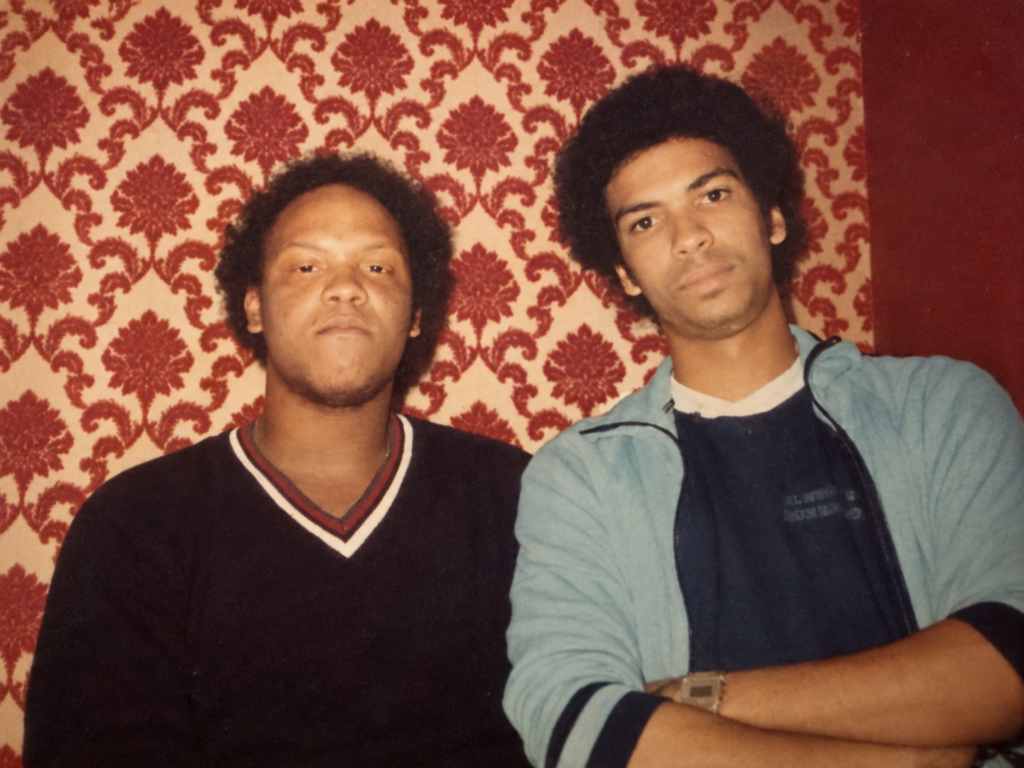
I think often about what knowing could have meant for him: earlier kidney testing, tighter blood pressure control, an earlier referral, more years. For me, knowing my APOL1 status is not a sentence. It is a reason to watch my kidneys and my blood pressure closely, and to make sure my children know their risk too.
Lipoprotein(a) is the other inherited risk I carry. My level is 170 nmol/L, well above the 125 nmol/L mark commonly used to flag high risk. Lp(a) is set almost entirely by genes, and diet and exercise barely move it. So I work on everything around it: I take a statin, I exercise, and I keep my blood pressure and LDL cholesterol in check. I have had no heart attack or stroke, and I intend to keep it that way. My children should know their Lp(a) number too, because it runs in families.
That is the difference between fatalism and precision. Fatalism says, “It runs in the family.” Precision says, “It runs in the family, so here is what we do about it.”
The precision medicine connection
Knowing an inherited risk is only useful if it changes care. Here is where it does:
1. Kidney tests that no longer adjust for race
Labs now report kidney function (eGFR) using a 2021 equation that does not use race. For people with APOL1 risk or a family history of kidney failure, that number should be paired with a urine albumin test, and a cystatin C blood test can help confirm borderline results.
2. Blood pressure medicines
The 2025 U.S. blood pressure guideline no longer provides race-specific drug recommendations, but international guidelines and my practice still favor a calcium channel blocker or a thiazide-type diuretic as an initial step for Black adults and note a significantly higher risk of ACE inhibitor-induced swelling (angioedema). I prefer ARB-class medications instead of ACE inhibitors for African Americans. Most people with high blood pressure end up needing two medicines anyway so a combination of these work best for me. For more, read Are you on the right blood pressure medicine?
3. Medicines to check before prescribing
People with G6PD deficiency can have a dangerous breakdown of red blood cells with certain drugs, such as rasburicase, primaquine and dapsone. A simple blood test before those drugs prevents the problem.
4. Knowing the limits
A genetic result describes risk, not a diagnosis. Most APOL1 carriers never develop kidney failure, and a normal result does not erase risk from blood pressure, diabetes or smoking. Consumer ancestry kits are not clinical tests; confirm anything important with your doctor or a genetic counselor.
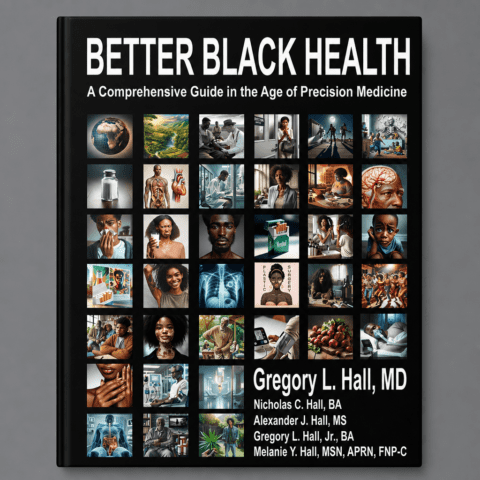
I cover these topics in more depth in Better Black Health, written for patients and families, and in Precision Medicine for African Americans, written for clinicians.
What to do with this
For patients and families:
- Learn your family’s health history: who had kidney failure, early heart disease, cancer or strokes, and at what age.
- Ask your doctor whether your ancestry or family history should change what you are tested for.
- Ask about specific tests where they fit: APOL1, lipoprotein(a), sickle cell trait, G6PD, genetic testing for cancer risk, gene testing before certain medicines, and a dilated eye exam starting at 40.
- Treat a known risk as a to-do list, not a verdict.
For clinicians:
- Use race and family history to open questions, never to close them.
- Pair every inherited risk with an action: a test, a screening interval, a treatment target.
- Never let a genetic explanation replace the work on access, trust and social conditions. Do both.
The goal of precision medicine for Black Americans is not to explain away our health gaps. It is to close them faster, with every tool we have. Genetic risk is one of those tools.
Genetic risk isn’t destiny. It’s a target.

Sources
- Johns Hopkins Medicine. U.S.-Born Black Women at Higher Risk of Preeclampsia than Foreign-Born Counterparts. 2021.
- American Kidney Fund. APOL1-Mediated Kidney Disease.
- Shije JZ, et al. The Frequency of V122I Transthyretin Mutation in African American Individuals With Bilateral Carpal Tunnel Syndrome. Front Neurol. 2022.
- Mehta A, et al. Lipoprotein(a) and ethnicities. Atherosclerosis. 2022;349:42-52.
- STAT News. Blood cell counts have unfairly kept Black and Middle Eastern people from clinical trials. 2024.
- Dana-Farber Cancer Institute. Criteria for cancer clinical trials place patients of African and Middle Eastern ancestry at a disadvantage. 2024.
- Lacy ME, et al. Association of sickle cell trait with hemoglobin A1c in African Americans. JAMA. 2017.
- Wheeler E, et al. Impact of common genetic determinants of hemoglobin A1c on type 2 diabetes risk and diagnosis. PLoS Med. 2017.
- Sirugo G, Williams SM, Tishkoff SA. The missing diversity in human genetic studies. Cell. 2019. Summary.
- Tang H, et al. Genetic structure, self-identified race/ethnicity, and confounding in case-control association studies. Am J Hum Genet. 2005.
- Bryc K, et al. The genetic ancestry of African Americans, Latinos, and European Americans across the United States. Am J Hum Genet. 2015.
- Inker LA, et al. New creatinine- and cystatin C–based equations to estimate GFR without race. N Engl J Med. 2021.
- Bridging the gap in racial/ethnic disparities: perspectives from the 2025 AHA/ACC High Blood Pressure Guideline.
- MedlinePlus Genetics. Glucose-6-phosphate dehydrogenase deficiency.
- FitzGerald JD, et al. 2020 American College of Rheumatology Guideline for the Management of Gout. AAFP summary. 2021.
- Clinical Pharmacogenetics Implementation Consortium. CPIC Guideline for Tacrolimus and CYP3A5.
- National Eye Institute. Eye drops may delay or prevent glaucoma in African Americans at higher risk.
- St. Jude Children’s Research Hospital. Alpha thalassemia trait.
- Brewster LM, et al. Distribution of creatine kinase in the general population: implications for statin therapy. Am Heart J. 2007.
- Forrest KY, Stuhldreher WL. Prevalence and correlates of vitamin D deficiency in US adults. Nutr Res. 2011.
- NIH Office of Dietary Supplements. Vitamin D: Fact Sheet for Health Professionals.