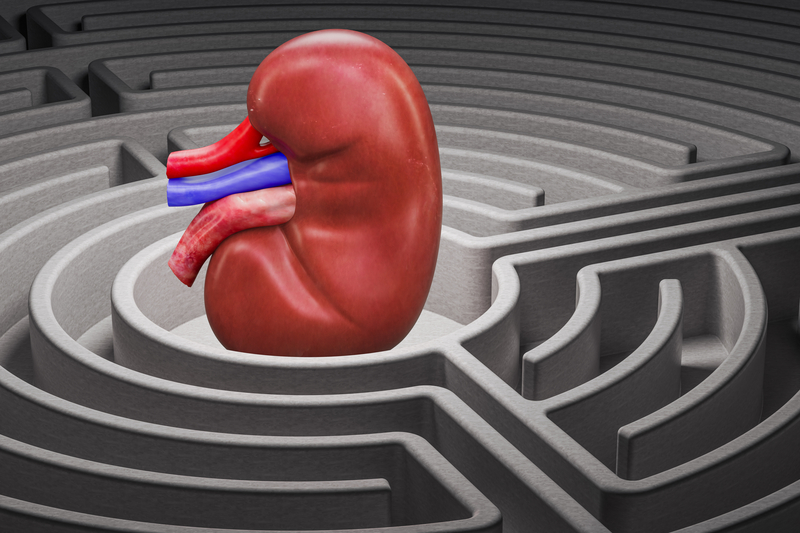

Kidney disease in African Americans is one of the clearest examples of a health gap, and it causes a great deal of suffering and early death. Most kidney failure is caused by diabetes and high blood pressure, and both are more common in African Americans. As a result, Black Americans are about three to four times more likely than white Americans to develop kidney failure. If you have high blood pressure, diabetes, or both, your risk of kidney failure that requires dialysis is much higher if you are African American.
Keeping your blood pressure and blood sugar under control lowers that risk substantially. It does not erase all of it, because genes also play a part (more on that below). That is why it is critical that if you have high blood pressure, you take medication to bring it down. If you have diabetes, make sure your blood sugars are controlled, because if they are not, your risk of needing dialysis is very high.
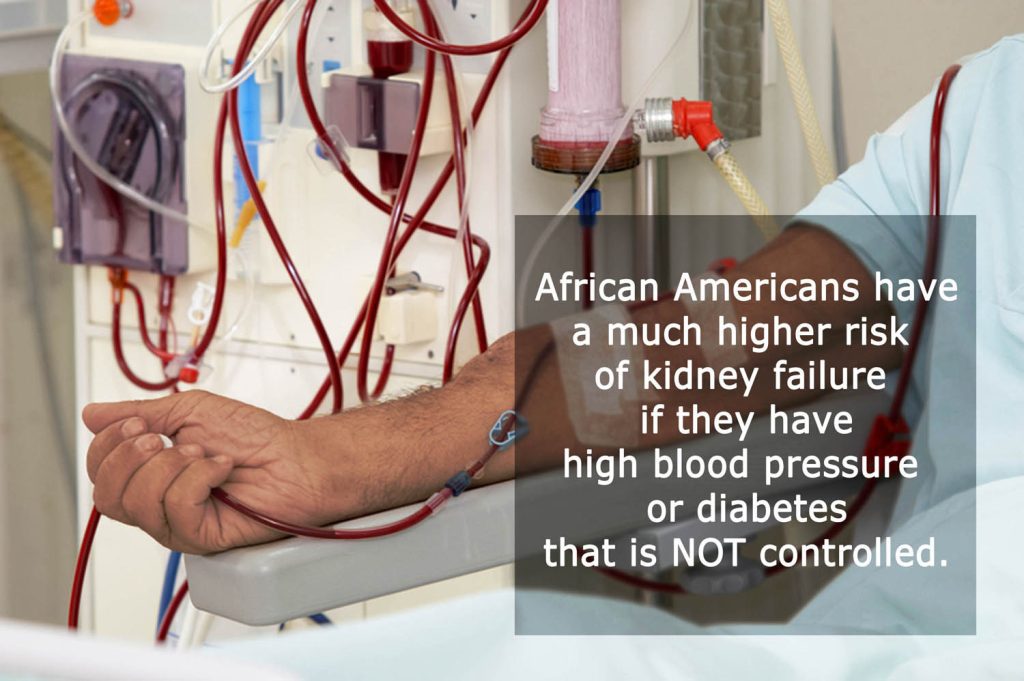
Risk for requiring dialysis is high
While African Americans are about 13 percent of the U.S. population, we make up about 35 percent of people on dialysis. Diabetes is the leading cause of kidney failure, and high blood pressure is the second most common cause.
Not having medical insurance or access to medical care, along with the large number of people with high blood pressure, contribute greatly to kidney disease in African Americans. Having high blood pressure but being on the wrong medications can contribute as well.
Well-designed studies have not fully explained the extra kidney disease seen in Black Americans. Some research shows that, at the same age and blood pressure, African Americans tend to have lower blood flow to the kidneys, and that the kidneys handle salt and fluid somewhat differently. Reducing the salt in your diet can greatly improve your health.
A genetic cause: the APOL1 gene

Part of the extra kidney risk in African Americans comes from variants in a gene called APOL1. These variants, called G1 and G2, became common in parts of Africa because they protected against African sleeping sickness (known in medical circles as African trypanosomiasis), a frequently deadly infection spread by the tsetse fly. It is similar to the way sickle cell trait protects against malaria.
About one in three African Americans carries one copy of an APOL1 risk variant, and about 13 percent carry two copies, one from each parent. One copy adds little or no kidney risk. Two copies raise the risk of kidney disease substantially, and researchers have found that these variants explain much of the extra kidney failure in Black Americans that has long been blamed on high blood pressure. Even so, most people with two copies never develop kidney failure, so other “second hits,” such as infections or uncontrolled blood pressure, also matter. People with two copies who already have kidney disease tend to lose kidney function faster.
Obesity can lead to kidney problems too
In addition to these genetic differences, researchers also suspect that increased obesity in African Americans is driving up kidney disease. They found that as your BMI (Body Mass Index is calculated based on your weight and height) gets higher, the risk for kidney problems increases.
With all of the kidney disease in the African American community, there is one more curious finding. On average, African Americans on dialysis live longer than white Americans on dialysis. That advantage is seen mainly in older adults, though; younger Black patients actually do worse than white patients of the same age. Researchers at Wake Forest School of Medicine found that among African Americans on hemodialysis whose kidney failure was not caused by diabetes, those with two APOL1 risk variants lived longer. One possible reason is that their kidney failure came from the gene rather than from years of hardening of the arteries, but this is still being studied.
The precision medicine connection
Precision medicine means using your genes, ancestry and test results to guide your care. Kidney disease is one of the best examples of why it matters for African Americans.
1. APOL1 genetic testing
A blood or saliva test can show whether you carry zero, one or two APOL1 risk variants. Testing is most useful for Black adults who have kidney disease or protein in the urine without a clear cause, who have a strong family history of kidney failure, or who are thinking about donating a kidney to a family member. Ask about genetic counseling before and after the test, because having two copies is a risk, not a diagnosis.
2. A treatment aimed at the gene
For the first time, medicines are being developed to target APOL1 directly. In September 2026, Vertex reported that its investigational drug inaxaplin lowered protein in the urine in people with APOL1-mediated kidney disease, and its larger Phase 2/3 AMPLITUDE trial has finished enrollment. Inaxaplin is not yet approved, but knowing your APOL1 status may make you eligible for trials like this.
3. A race-free kidney function test
For years, the standard formula for estimated kidney function (eGFR) gave Black patients a higher number simply because of race, which could make kidney disease look milder than it was. In 2021, a new equation without race was adopted across the country. Because the old formula delayed some Black patients from qualifying for the kidney transplant list, the national transplant network now requires transplant programs to credit back that lost waiting time. If you are waiting for a kidney, ask your transplant center whether your wait time has been adjusted. Adding a cystatin C blood test to the usual creatinine test can also give a more accurate reading.
4. Choosing blood pressure medicine
Thiazide diuretics and calcium channel blockers are often the first choice for high blood pressure in Black patients. But if you already have kidney disease with protein in the urine, the AASK trial in African Americans found that an ACE inhibitor (ramipril) slowed kidney damage better than amlodipine. Newer drugs called SGLT2 inhibitors also protect the kidneys in many people with kidney disease, with or without diabetes. Ask your doctor which combination fits your kidneys, not just your blood pressure.
5. Sickle cell trait and the kidneys
About 1 in 13 African Americans has sickle cell trait. A 2014 study in JAMA found that sickle cell trait was linked to higher rates of chronic kidney disease and protein in the urine. If you carry the trait, or two APOL1 variants, a yearly urine albumin test along with your blood work can catch kidney damage early, when it is most treatable.
To learn more, read Better Black Health, written for patients and families. Clinicians can find a deeper review in Precision Medicine for African Americans (Springer, 2nd ed., 2025).
Here’s what you need to do

Kidney disease in African Americans can be a confusing topic to understand, and there is a lot to consider.
The most important points are:
- If you have high blood pressure, take your medicine and watch your salt intake so that your pressure stays normal. That helps protect your kidneys.
- If you have diabetes, take your medicine and watch your diet so that your blood sugars stay in a healthy range.
- Watch your weight, because extra weight raises your chance of kidney disease.
- Ask for a yearly urine albumin test and an eGFR blood test, especially if you have high blood pressure, diabetes or a family history of kidney failure.
- If kidney failure runs in your family, ask your doctor whether APOL1 genetic testing is right for you.