Medicines only work when they are taken the right way. In this short video, I explain what the abbreviations on your prescription mean, when to take each dose, how to space your doses, and simple ways to remember them. Below is a written guide you can keep and share with family members who help manage medicines.
What the abbreviations on your prescription mean
- QD – once a day. Take it at about the same time every day. Because “QD” is easy to misread, hospitals and pharmacies are now asked to write out “once daily” instead (The Joint Commission).
- BID – twice a day, ideally about 12 hours apart, such as 8 a.m. and 8 p.m.
- TID – three times a day, spread through your waking hours, such as with breakfast, lunch and dinner, unless your doctor tells you to take it every 8 hours.
- QID – four times a day, such as with each meal and at bedtime.
- QHS – at bedtime. PRN – only as needed. AC – before meals. PC – after meals.
With food or on an empty stomach?
- Thyroid medicine (levothyroxine) works best on an empty stomach, 30 minutes to an hour before breakfast (MedlinePlus).
- Metformin is taken with meals to cut down on stomach upset. If it still bothers your stomach, read my article on metformin intolerance.
- Water pills (diuretics) such as hydrochlorothiazide or chlorthalidone are usually best in the morning, so you are not up all night going to the bathroom.
- Blood pressure pills can be taken in the morning or the evening. In the TIME trial of more than 21,000 adults, the time of day made no difference in heart attacks, strokes or deaths (American College of Cardiology). Pick the time you are least likely to forget.
Spacing your doses
Spacing doses evenly keeps the level of medicine in your body steady. Some medicines also need to be kept apart from others. Calcium (such as Tums) and iron supplements should be taken at least 4 hours before or after levothyroxine (MedlinePlus). Minerals in antacids and multivitamins can also block some antibiotics from being absorbed. When you start a new medicine, ask your pharmacist, “Does this need to be spaced away from anything else I take?”
If you miss a dose
For most medicines, take the missed dose as soon as you remember. If it is almost time for the next one, skip the missed dose and go back to your regular schedule. Never take a double dose to catch up. Some medicines have different rules, so check the label or call your pharmacist. And do not stop a blood pressure medicine on your own: some, such as clonidine and beta-blockers, can cause blood pressure or heart rate to jump if they are stopped suddenly.
Simple ways to remember
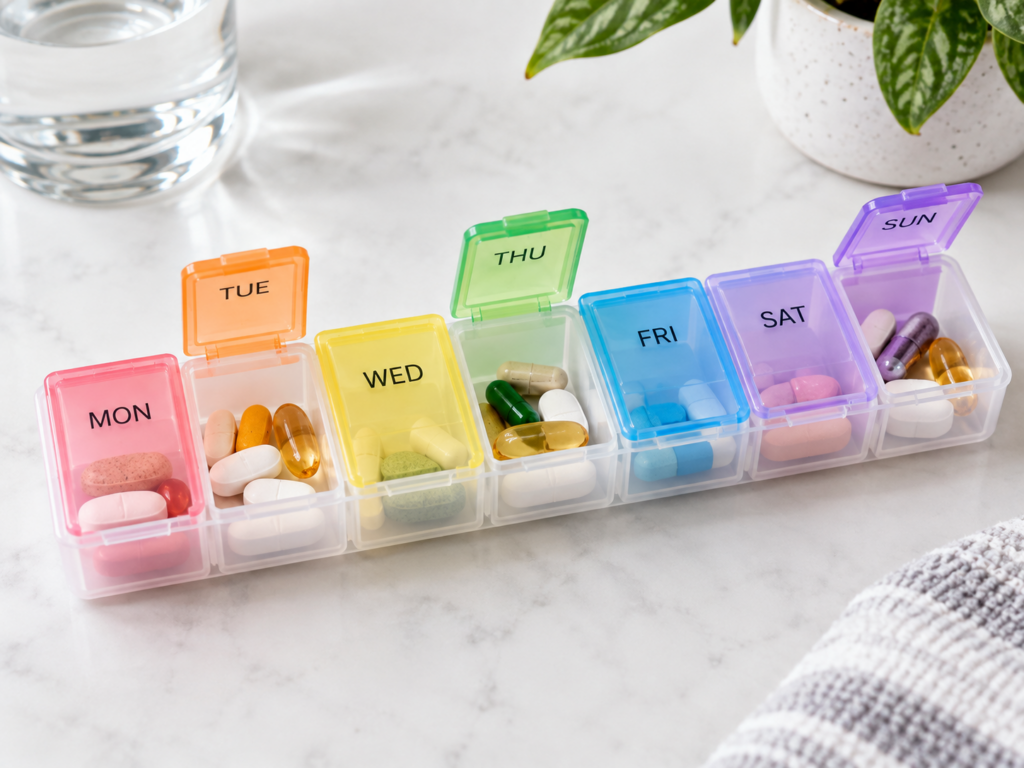
- Use a weekly pill organizer with morning and evening rows.
- Set a phone alarm, or tie your pills to something you already do every day, like brushing your teeth.
- Ask your pharmacy about 90-day supplies and “medication sync,” so all your refills are ready on the same day.
- Keep an up-to-date list of every medicine and supplement you take, and bring it to every visit.
- Ask your doctor whether two of your medicines can be combined into one pill. Fewer pills means fewer missed doses.
Many patients worry about side effects and quietly stop their medicines. If that is you, talk with your doctor first. I wrote about this in African Americans Fear Medication Side Effects.
The precision medicine connection
How you take a medicine matters. So does how your body handles it. Here is where ancestry and genetics come in for Black patients.
1. Blood pressure: one pill can beat three
Thiazide-type diuretics and calcium channel blockers have long been first choices for Black adults with high blood pressure, and they still work well for many of my patients. The 2025 AHA/ACC blood pressure guideline now lets doctors choose from four medicine classes for everyone, and it encourages starting many patients, including higher-risk groups such as Black adults, on two medicines combined in a single pill. This improves both blood pressure control and adherence (Bridging the Gap, 2025 guideline review). See my article on blood pressure medicine for African Americans.
2. Your kidney numbers can change your dose
Many medicines, including metformin and some newer diabetes and heart medicines, are dosed by your kidney function (eGFR). In 2021, labs switched to an eGFR equation that no longer adjusts for race. For many Black patients, the reported number dropped overnight, even though their kidneys did not change. In one study, the average eGFR for Black patients fell from about 82 to 75, and a small number became ineligible for certain diabetes medicines (Pharmacy, 2025). If you are told your kidney function “dropped,” ask whether the lab equation changed before your medicine is stopped or reduced.
3. G6PD deficiency: some medicines are risky
About 1 in 10 African American men has G6PD deficiency, an inherited condition that most people do not know they have. Certain antibiotics, malaria drugs and other medicines can break down red blood cells in people with it. Read G6PD deficiency in African Americans: medicines to avoid, and ask for the blood test before starting one of those medicines.
4. Some genes change how fast you clear a medicine
The CYP3A5 gene controls how quickly the body clears tacrolimus, a key medicine after kidney and other transplants. Most people of African ancestry carry an active form of this gene, while most people of European ancestry do not. Carriers clear the drug faster, so expert guidelines recommend starting them at 1.5 to 2 times the usual dose, with close blood-level checks (CPIC guideline). Pharmacogenetic tests like this are becoming more available. Ask your doctor whether one makes sense for you.
For patients and families, I explain more in my book Better Black Health. For clinicians, see Precision Medicine for African Americans (Springer).