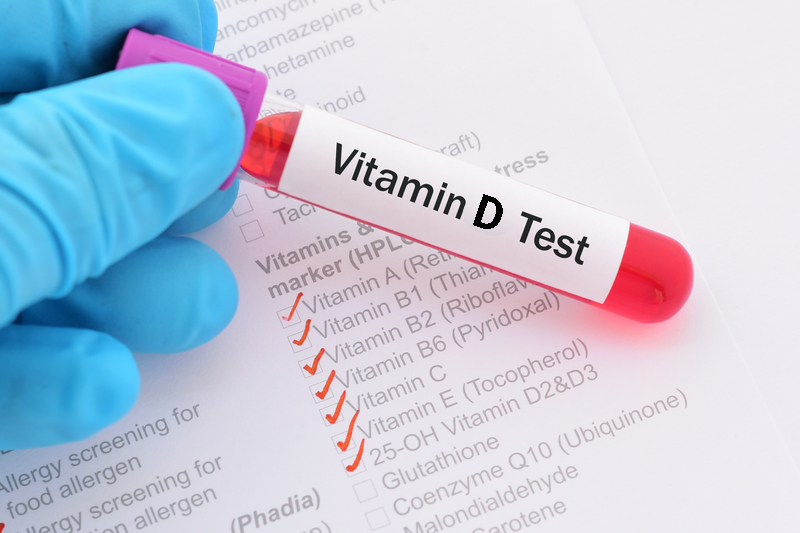

African Americans have low vitamin D
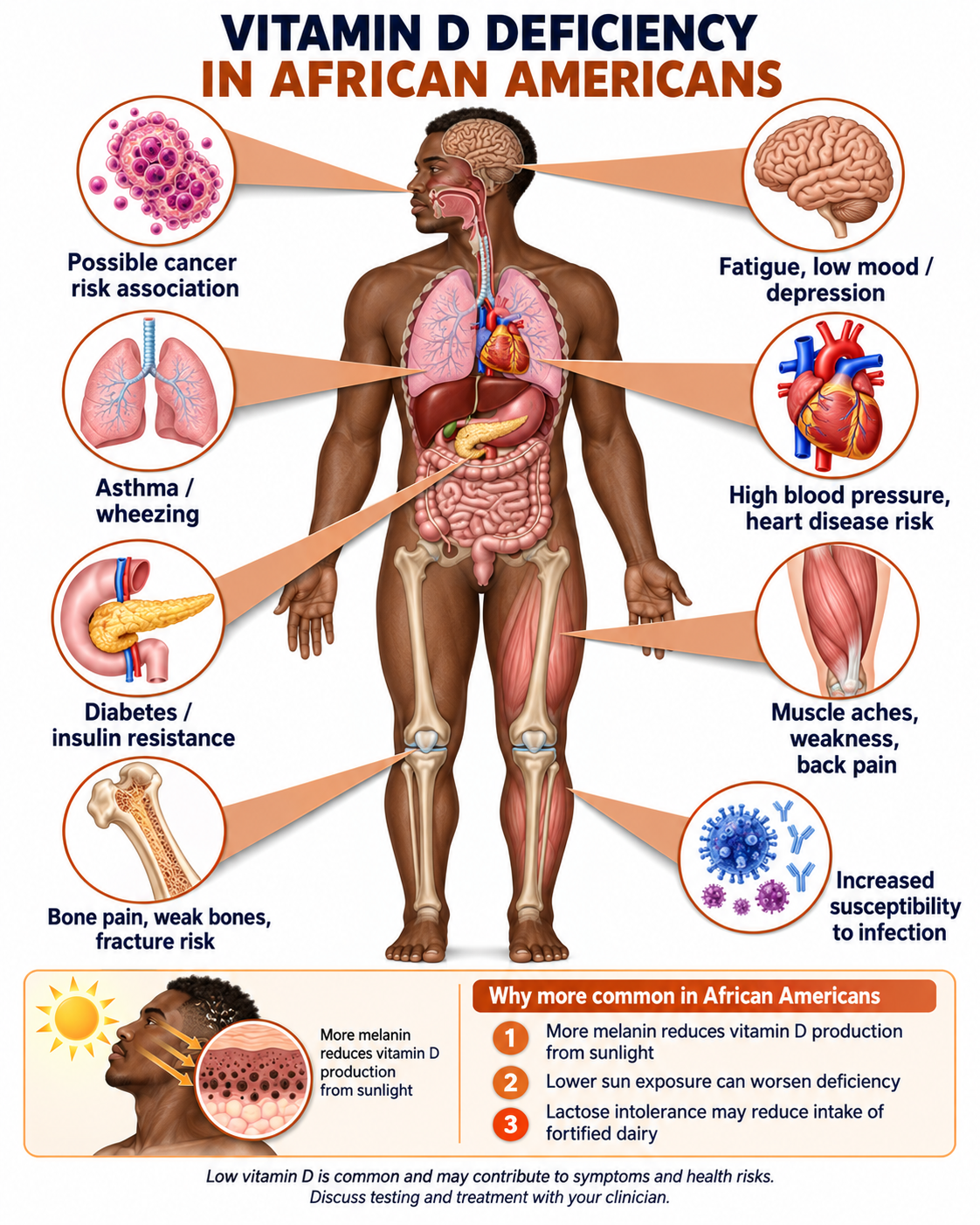
Vitamin D is acquired through diet and skin exposure to ultraviolet B light. The skin’s production of vitamin D is determined by length of exposure, latitude, season, and degree of skin pigmentation. African Americans produce less vitamin D than do White Americans in response to equal levels of sun exposure and have dramatically lower vitamin D concentrations with some studies indicating up to 82 percent of the African American population as low.[1] Yet both groups absorb vitamin D from food and supplements equally well.
Overall, African Americans tend to have lower vitamin D levels and are very frequently labeled “vitamin D deficient,” yet have stronger bones and fewer fractures. But vitamin D is linked to far more than bone strength. Low vitamin D is linked to higher risk of breast cancer, colon cancer, and prostate cancer, and to higher rates of heart disease, kidney problems, and diabetes. Lower vitamin D on the lab report, yet stronger bones, is one of the classic puzzles of precision medicine, and I explain what the science now says below.
We need more vitamin D
Four of five African Americans are vitamin D deficient compared to less than one in three White Americans. Vitamin D deficiency is associated with increasing diabetes, hypertension, prostate cancer, breast cancer, colon cancer, and more. African Americans have the highest risk for all of these diseases.
Ken Batai and colleagues at the University of Arizona, studying more than 1,600 men, found that higher vitamin D intake was strongly associated with lower odds of aggressive prostate cancer in African American men — a potential benefit in preventing prostate cancer in African American men — while high calcium intake was associated with higher odds. These findings were strongest in African Americans.[3]
“Calcium and vitamin D are important nutrients, and they may have preventive effects against many health conditions. Although toxicity from high vitamin D supplementation may be low, high calcium intake is associated with increased prostate cancer risk as well as risk of cardiovascular disease and kidney stones. High calcium consumption might be harmful and for prostate cancer prevention, high dose calcium supplementation and fortification should be avoided, especially among AA (African American) men.”
Vitamin D deficiency raises cancer risk
High calcium intake in African American men may actually increase the risk for prostate cancer, while higher vitamin D intake has been linked to lower risk. Vitamin D plays a crucial role in regulating cell growth and maintaining a healthy immune system, which can help in cancer prevention. It aids in cell differentiation and apoptosis, reducing the risk of cancerous cell development. Additionally, adequate vitamin D levels have been associated with lower inflammation, which is a known factor in cancer progression. Vitamin D enhances the immune system by stimulating the production of antimicrobial peptides, which help the body fight off infections. It also modulates the activity of immune cells, such as T cells and macrophages, ensuring they function optimally. This regulation helps prevent chronic inflammation, a condition that can contribute to the development and progression of cancer.
Besides its role in cancer prevention, vitamin D is essential for bone health, as it facilitates the absorption of calcium and phosphorus, which are critical for maintaining strong bones. Low vitamin D is also associated with high blood pressure, heart disease, and stroke — although large trials, including VITAL, which enrolled more than 5,000 Black Americans, have not shown that supplements prevent heart disease in people who are not deficient.[4] Additionally, vitamin D has been linked to improved mood and cognitive function, potentially lowering the risk of depression and cognitive decline.
Dementia too
Low vitamin D is also associated with Alzheimer’s and other dementias and may contribute to cognitive decline. Research suggests that adequate vitamin D levels are crucial for brain health, as they support neuroprotection and reduce the risk of neurodegenerative diseases.
To maintain adequate vitamin D levels, it is important to spend time outdoors in sunlight, as the skin synthesizes vitamin D when exposed to UV rays. Additionally, incorporating foods rich in vitamin D, such as fatty fish, fortified dairy products, and egg yolks, into your diet can help boost your intake. For most of us who do not get enough sun exposure or have dietary restrictions (lactose intolerance and/or high cholesterol), taking vitamin D supplements or multivitamins with an adequate amount of vitamin D is the practical answer. Official recommendations call for 600 IU a day for most adults (800 IU after age 70), with a safe upper limit of 4,000 IU a day.[5] In my practice, I often recommend about 2,000 IU a day for African Americans who get little sun — well within the safe range. The right dose for you depends on your level and your health, so talk with your doctor. (If you are considering vitamin D with K2, read why one-size-fits-all supplement advice doesn’t work first.)
The precision medicine connection
Vitamin D is one of the clearest examples of why one-size-fits-all medicine does not fit Black patients. Four points matter most.
1. The vitamin D paradox: lower levels, stronger bones
Black Americans have, on average, lower vitamin D levels but higher bone density and fewer fractures than White Americans. The cutoffs used to define “deficiency” were built largely from studies of White populations, so the same number may not carry the same meaning for everyone. In 2024, the Endocrine Society recommended against routine vitamin D testing for healthy adults, including testing based on dark skin alone, and suggested supplements for groups who benefit regardless of their level: adults 75 and older, pregnant women, children and teens, and people with prediabetes.[7]
2. A gene variant fooled the lab test
A well-known 2013 study suggested Black Americans also have less of the protein that carries vitamin D in the blood, so their “free,” usable vitamin D might be normal.[2] Later research found that a common variant in the GC gene, more frequent in people of African ancestry, caused the lab test for that protein to undercount it. With more accurate tests, Black Americans still had lower free vitamin D.[6] The lesson is a precision medicine lesson: a test developed in one population can mislead in another. Low vitamin D in Black Americans appears to be real, which is why getting enough matters.
3. For Black men, more calcium is not better
As the Batai study above showed, higher vitamin D intake was linked to lower odds of aggressive prostate cancer in African American men, while high calcium intake was linked to higher odds. Get vitamin D, but avoid high-dose calcium supplements unless your doctor prescribes them.
4. Water pills, kidney stones, and high doses
Thiazide “water pills” such as hydrochlorothiazide and chlorthalidone, often a first blood pressure medicine for Black adults, cause the body to hold on to calcium. Combined with high-dose vitamin D and calcium supplements, they can push blood calcium too high. If you take a water pill, have kidney disease, or have had kidney stones, ask your doctor before taking more than 2,000 IU a day.[5]
These are the kinds of differences covered in Better Black Health, written for patients and families, and Precision Medicine for African Americans (Springer Nature), written for clinicians.
There is a multivitamin designed just for African Americans, which I developed. GNetX Sequence Multivitamins have high vitamin D, vitamin C, magnesium, and much more of what African Americans need while leaving out those substances that may be harmful. (Learn more about the best multivitamins for African Americans.)
References
- Forrest KYZ, Stuhldreher WL. Prevalence and correlates of vitamin D deficiency in US adults. Nutr Res. 2011;31(1):48-54. pubmed.ncbi.nlm.nih.gov/21646368/
- Powe CE, Evans MK, Wenger J, et al. Vitamin D-binding protein and vitamin D status of Black Americans and White Americans. N Engl J Med. 2013;369(21):1991-2000. doi.org/10.1056/NEJMoa1306357
- Batai K, Murphy AB, Ruden M, et al. Race and BMI modify associations of calcium and vitamin D intake with prostate cancer. BMC Cancer. 2017;17:64. pmc.ncbi.nlm.nih.gov/articles/PMC5248493/
- Manson JE, Cook NR, Lee IM, et al. Vitamin D supplements and prevention of cancer and cardiovascular disease (VITAL). N Engl J Med. 2019;380(1):33-44. nejm.org/doi/full/10.1056/NEJMoa1809944
- NIH Office of Dietary Supplements. Vitamin D: fact sheet for health professionals. ods.od.nih.gov/factsheets/VitaminD-HealthProfessional/
- Nielson CM, Jones KS, Chun RF, et al. Free 25-hydroxyvitamin D: impact of vitamin D binding protein assays on racial-genotypic associations. J Clin Endocrinol Metab. 2016;101(5):2226-2234. academic.oup.com/jcem/article/101/5/2226/2804833
- Demay MB, Pittas AG, Bikle DD, et al. Vitamin D for the prevention of disease: an Endocrine Society clinical practice guideline. J Clin Endocrinol Metab. 2024. endocrine.org (summary)
Related Podcast Episode
Our Vitamin Needs are Different
In this episode:
Dr. Hall reviews the nutritional differences African Americans experience as well as discusses a theory for why GNetX Sequence Multivitamins for African Americans are the best choice for a multivitamin.