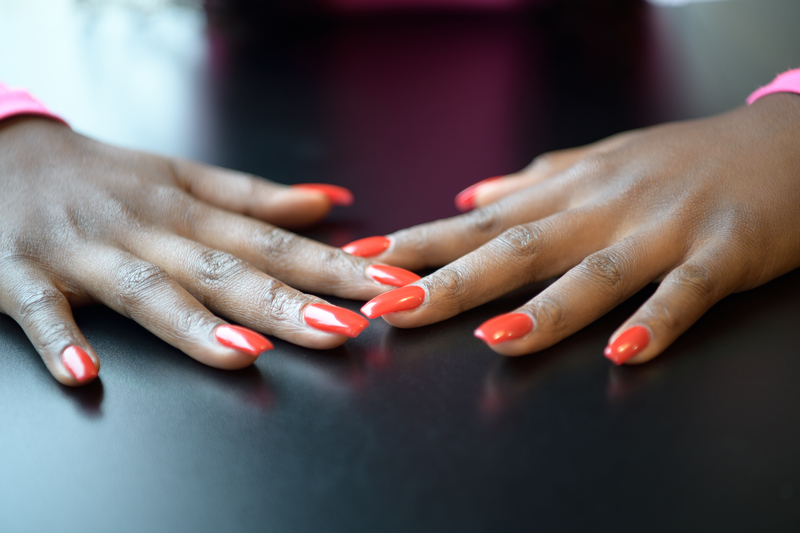


Black women take pride in their appearance, right down to the smallest details. Fingernails and toenails are part of that look. Many of my patients want nails that are strong and attractive, and also distinctly their own.
Yet many Black women tell me their natural nails are brittle, peel, or won’t grow. When acrylics or gels go on top, the weak nail underneath goes unnoticed, or the artificial nails get the blame. Whatever your style, stronger, healthier nails start with a healthy body and good nail care.
What your nails are made of
Nails are made mostly of keratin, the same tough protein found in hair and the outer layer of skin. Unlike bone, they are not built mainly from calcium. The cells at the base of the nail (the matrix) build that keratin, and they need a steady supply of protein, iron, zinc, vitamins and other nutrients, plus protection from everyday damage (Chessa et al., 2019).
Low vitamin D, magnesium and zinc in Black women
Shortfalls in key nutrients are common in our community. In a national analysis of NHANES data, 82% of Black Americans got less vitamin D from food than the estimated average requirement, and 63% fell short on magnesium, compared with 64% and 42% of white Americans (Papanikolaou et al., 2015). The CDC’s Second Nutrition Report found that up to 31% of Black Americans had blood levels low enough to be considered vitamin D deficiency.
It starts young. A University of Houston study found low vitamin D in about 6 in 10 Black and Hispanic teens seen at a Texas clinic.
Which nutrients matter for nails
1. Vitamin D
Vitamin D receptors are found in keratinocytes, the cells that make nail keratin, and vitamin D helps control how those cells grow and mature. That is a good biological reason to keep your level healthy. To be clear, though, no clinical trial has tested vitamin D for nail strength yet, so I don’t promise it will fix brittle nails on its own.
2. Zinc
Zinc supports the rapid cell division that grows new nail. Zinc deficiency can make nails fragile, and a dermatology review found that 20–30 mg of zinc a day over several months seemed to help people who were low (Chessa et al., 2019).
3. Iron
Low iron can cause thin, brittle or spoon-shaped nails. The CDC found iron deficiency in 16% of Black women of childbearing age, higher than in other groups. A ferritin blood test tells you whether this is your problem.
4. Magnesium
Magnesium is one of the most common shortfalls in Black Americans and matters for bone, muscle and heart health. Its direct effect on nails hasn’t been well studied, but correcting a deficiency is good medicine either way.
5. Biotin
Biotin is the star ingredient in most “hair, skin and nails” supplements. Small studies suggest it may help brittle nails, but the evidence is limited, and high doses can throw off lab tests (see below).
Everyday habits that weaken nails
In that same review, the most common causes of brittle nails came from outside the body: repeated wetting and drying of the hands, harsh detergents, nail polish removers, and the way acrylics and gels are applied and taken off. Aging and thyroid disease also play a role; about 90% of people with an underactive thyroid have nail changes (Chessa et al., 2019). A few simple habits help:
- Wear gloves for dishes and cleaning (cotton gloves under vinyl work well).
- Moisturize your nails and cuticles after washing your hands.
- Give your nails breaks between acrylic or gel sets, and have them removed professionally.
- Don’t use your nails as tools to open cans or scrape labels.
- See your doctor if brittle nails come with tiredness, hair loss, feeling cold or weight changes. These can point to low iron or thyroid disease.
Give your body what it needs

As I’ve written on my website and discussed on my podcast “Better Black Health,” we are all just a series of chemical reactions. The reactions that build strong nails depend on protein, iron, zinc, vitamin D, magnesium and other nutrients. When we run short, our nails are one of the places it can show.
Black consumers spend about $7.4 billion a year on beauty and skin products. Some of that investment should go toward making our bodies healthier from the inside.
As a physician, I developed GNetX Sequence Multivitamins to help replace the vitamins and minerals African Americans most often lack. Pair it with good nail care, and if your nails don’t improve, ask your doctor to check for problems such as low iron or thyroid disease. Go to SequenceMultivitamins.com or Amazon.com to get started.
The precision medicine connection
Precision medicine means care that fits your biology, including your ancestry. Even something as small as a fingernail shows why that matters.
1. Dark streaks in nails are common in Black skin, but watch new ones
Brown or black lines running the length of the nail (longitudinal melanonychia) appear in about 77% of African Americans over age 20 and in nearly everyone over 50 (Leyden et al., 1972). Most are harmless. But acral lentiginous melanoma, the type that grows on the palms, soles and under the nails, makes up a larger share of melanomas in Black patients (16.7% vs. 2% in white patients), and Black patients are less often diagnosed at an early, localized stage (55% vs. 78%) (Culp and Lunsford, 2019). See a dermatologist for a streak that is new, getting wider or darker, involves only one nail, or spreads onto the skin around the nail.
2. Low vitamin D is the rule, especially up north
Melanin, the pigment that protects darker skin, also slows how fast the skin makes vitamin D from sunlight, so Black skin needs much more sun exposure to make the same amount. Where you live matters too. In northern cities like Cleveland, New York, Chicago and Philadelphia, the winter sun is too weak for the skin to make vitamin D at all for several months of the year (Webb et al., 1988), and urban life keeps most of us indoors. That is why vitamin D levels run broadly low in Black Americans, and why I recommend that my Black patients, particularly in the North, have their level checked and take 2,000 IU of vitamin D every day.
3. Not every “low blood count” is low iron
Alpha thalassemia trait affects an estimated 20–30% of African Americans, and sickle cell trait is also common. Both can produce small red blood cells that look like iron deficiency on a routine blood count (St. Jude Children’s Research Hospital). Before taking iron for your nails, ask for a ferritin test so you treat the right problem.
4. Beauty supplements can skew your lab tests
High-dose biotin can cause falsely high or low results on some lab tests, including the troponin test used to diagnose heart attacks and thyroid tests (FDA). Tell your doctor about every supplement you take, especially before blood work.
For a practical guide for patients and families, see my book Better Black Health. Clinicians can find the science in Precision Medicine for African Americans (Springer Nature, 2nd ed., 2025).
Related Podcast Episode
Black Dermatologist Talks About Having Healthy Skin, Hair, and Nails
In this episode:
Better Black Health with Dr. Greg Hall welcomes Jeffery Scales, MD a dermatologist from Durham, North Carolina also known as DRClearskin. They talk about a host of topics related to your skin, hair and nails. What is the most common…