

Zinc and infections
Zinc is essential for a healthy immune system and for wound healing. African Americans face higher rates of many infections, including sexually transmitted diseases, bacterial vaginosis, HIV, and diabetes-related wound infections that can lead to amputations. Zinc does not prevent these infections on its own, but a body that is low in zinc fights infection and heals wounds less effectively.
Studies have found lower zinc levels in African Americans starting in childhood and continuing into old age. Adults need 11 mg of zinc a day (men) or 8 mg (women).
Zinc in our diet
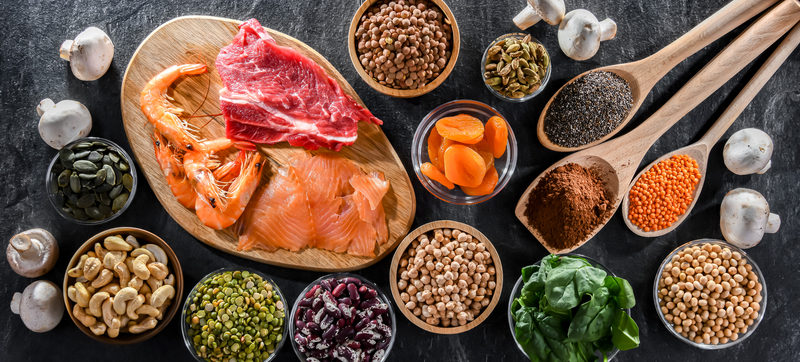
Zinc is found in meat, shellfish (oysters are the richest source), beans, nuts, seeds, and whole grains. Many of us eat fewer beans, nuts, seeds, and whole grains than recommended, and fast food and processed food deliver calories without much zinc. Beans and grains also contain phytates, which reduce zinc absorption, so people who eat little meat need more.
Zinc, colds, and the flu
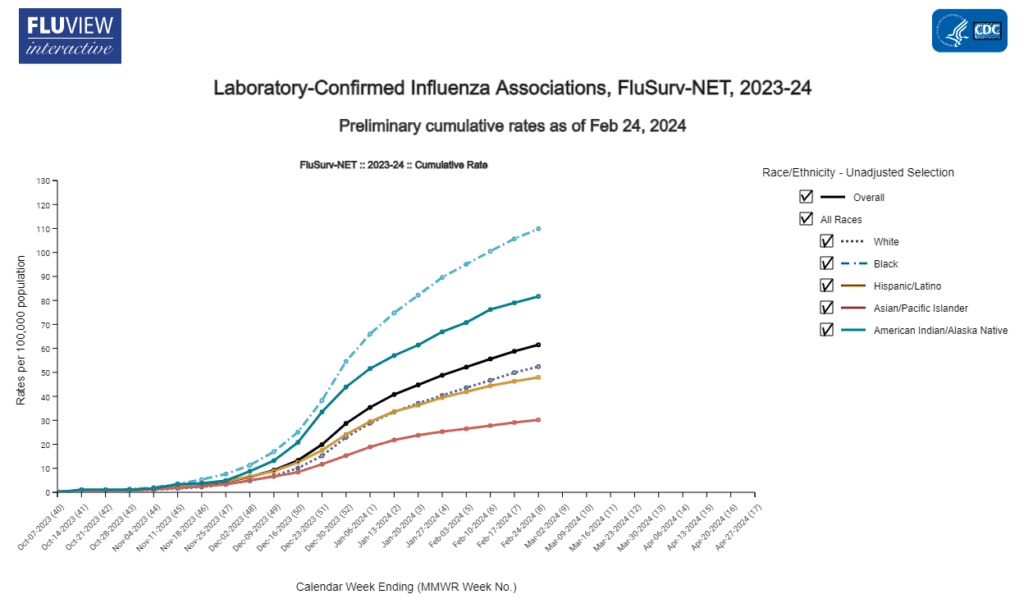
Many cold remedies use zinc as the “active ingredient.” A 2024 Cochrane review found that zinc may shorten a cold by about 2 days if you start it once symptoms begin, but it does little to prevent colds. There is no good evidence that zinc prevents or treats the flu. That matters because, as US News reported, Black Americans have the highest rate of hospitalization from the flu, as the CDC graph below shows. The flu shot remains the best protection.
Zinc and diabetes
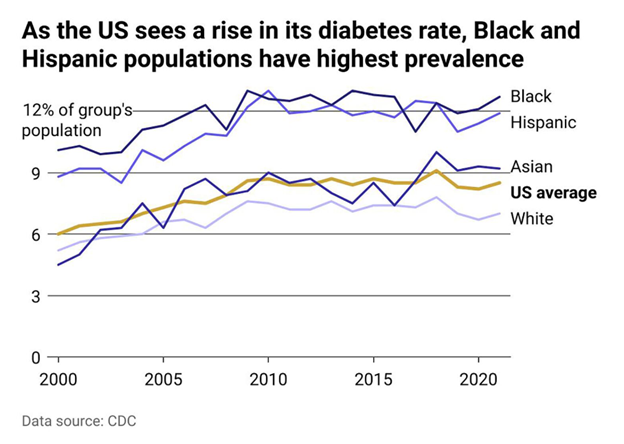
African Americans have among the highest rates of diabetes and a much higher death rate from it than White Americans. People with the highest zinc intake have about a 13% lower risk of developing type 2 diabetes, and in studies of zinc supplements, fasting blood sugar and A1c improved modestly. But a Cochrane review found there is not yet enough evidence that zinc supplements prevent diabetes. Diabetes also works in reverse: high blood sugar makes the kidneys lose more zinc in the urine, so people with diabetes are more likely to run low.
Zinc and prostate cancer
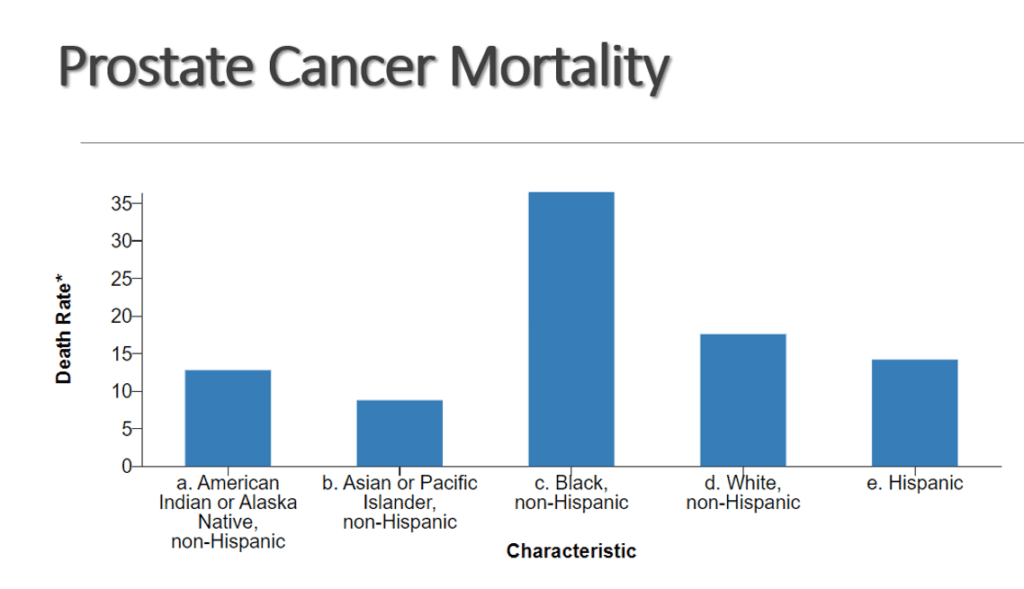
African American men have the highest risk of dying from prostate cancer, as the graph below shows. The healthy prostate holds more zinc than almost any other tissue, and prostate cancer cells lose that zinc, which is why researchers suspect zinc plays a protective role.
But more is not better. In a large study, men who took more than 100 mg of zinc a day had more than twice the risk of advanced prostate cancer, and other research supports keeping doses moderate. The safe upper limit for adults is 40 mg a day from all sources.
The precision medicine connection
Precision medicine looks at what is lowering your zinc, not just the community average. Three factors stand out for Black patients:
1. Your blood pressure pill may be draining zinc
Thiazide diuretics (“water pills”) such as hydrochlorothiazide and chlorthalidone are often recommended as a first blood pressure medicine for Black adults. They increase the amount of zinc lost in the urine. If you take one long term, especially if you also have diabetes, ask your doctor whether your zinc intake is adequate.
2. Sickle cell disease
Zinc deficiency is common in people with sickle cell disease, which occurs in about 1 in 365 Black babies born in the U.S., and the chelation medicines used to remove extra iron add to the problem. Zinc status is worth checking as part of sickle cell care.
3. Too much zinc causes its own problems
Taking more than 40 mg a day for months can block copper absorption and cause anemia, low white blood cells, and nerve damage, the opposite of what you want for your immune system. Zinc-containing denture creams used heavily have caused the same problem. Zinc also blocks the absorption of some antibiotics (such as ciprofloxacin and doxycycline), so take them at least 2 hours apart. Blood zinc tests vary with the time of day and recent illness, so a single low result should be interpreted with your doctor.
These are the kinds of differences covered in Better Black Health, written for patients and families, and Precision Medicine for African Americans (Springer Nature), written for clinicians.
I developed the formula for GNetX Sequence Multivitamins for African Americans to help address the deficiencies seen in our community. Go to SequenceMultivitamins.com or Amazon and get your 90-day bottle.
Watch: Benefits of Zinc for African Americans

Related Podcast Episode
Our Vitamin Needs are Different
In this episode:
Dr. Hall reviews the nutritional differences African Americans experience as well as discusses a theory for why GNetX Sequence Multivitamins for African Americans are the best choice for a multivitamin.