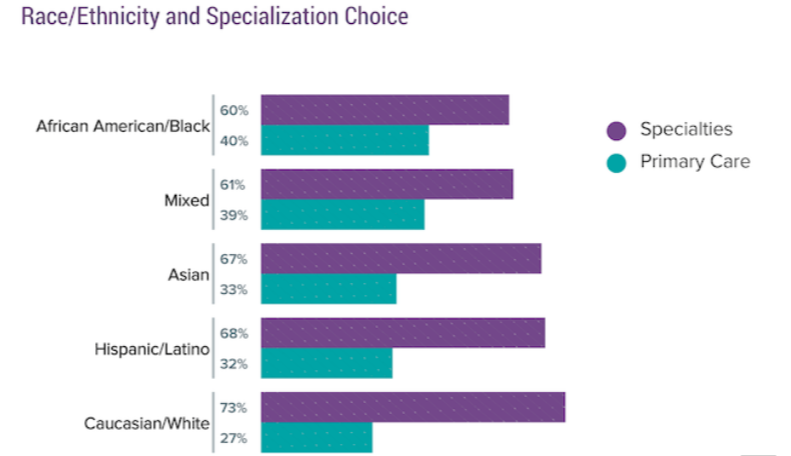
Black physicians are more likely than physicians of any other race or ethnicity to choose primary care. In Medscape’s 2018 physician compensation report, 40 percent of Black physicians practiced primary care, compared with 27 percent of white physicians.
Black doctors in primary care save lives
This matters because Black patients do better when there are more Black doctors. A 2023 national study found that in U.S. counties where more of the primary care doctors were Black, Black residents lived longer and had lower death rates. In an experiment in Oakland, California, Black men who saw a Black doctor were more likely to agree to preventive services such as diabetes and cholesterol screening and flu shots.
Supporting pipeline programs that help African Americans succeed in medical education will, in turn, increase the number of primary care physicians, build trust and improve the quality of care. That work has become harder: after the 2023 Supreme Court decision ending race-conscious admissions, the number of Black students entering medical school fell 11.6 percent in 2024.
And Black doctors make less money
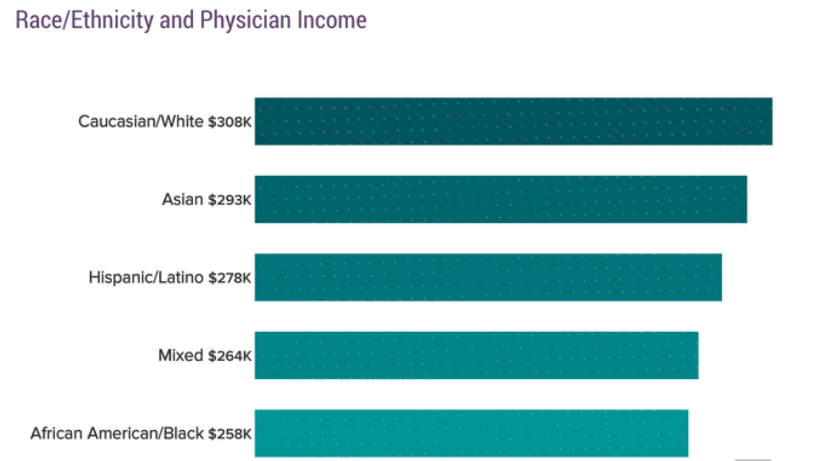
Unfortunately, the same Medscape report showed Black physicians earning the least, about $50,000 a year less than white physicians. Part of the gap comes from the fact that primary care pays less than most specialties. But a 2016 study in The BMJ found that white male physicians still earned about 35 percent more than Black male physicians after accounting for specialty, hours, experience and other factors.
If better outcomes come from relationships between patients and doctors who share their background, and Black and other underrepresented physicians care for more patients from those communities, then increasing the number of these physicians will improve care and save money. Paying primary care fairly is part of that equation.

The precision medicine connection
Precision medicine is often pictured as a specialist ordering a genetic test. In reality, it usually starts in primary care, where your family history, ancestry and routine labs come together.
1. Primary care is where risk is first spotted
Your primary care doctor is usually the first to notice patterns that point to inherited risk in African Americans: early kidney failure in the family (APOL1), sickle cell trait, G6PD deficiency, or medicines that “never work.” Knowing which genetic and lab tests are useful, and which are not, is a primary care skill.
2. Race-based formulas are being removed
Several tools once adjusted results based on race. Kidney function (eGFR) is now calculated without race, and the American Thoracic Society recommended race-neutral lung function equations in 2023. Primary care doctors are the ones who must catch these changes in your chart. Precision medicine means replacing a race label with the actual gene or measurement that drives risk.
3. Genetic research still leaves Black patients behind
About 86 percent of genetic study participants have been of European ancestry, so genetic tests are less informative for people of African ancestry and are more likely to return “uncertain” results. Black doctors, who are trusted by Black patients, play an important role in encouraging participation in research so that future tests work as well for us.
4. Ancestry is not the same as race
People of African ancestry have the greatest genetic diversity in the world, and African Americans’ mix of ancestries varies widely from person to person. Two Black patients can have very different genetic risks, so a race box on a form is never a substitute for family history and testing. A primary care doctor who knows you over time is best placed to put those pieces together.
To learn more, read Better Black Health, written for patients and families. Clinicians can find a deeper review in Precision Medicine for African Americans (Springer, 2nd ed., 2025).